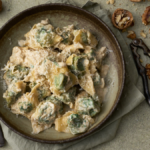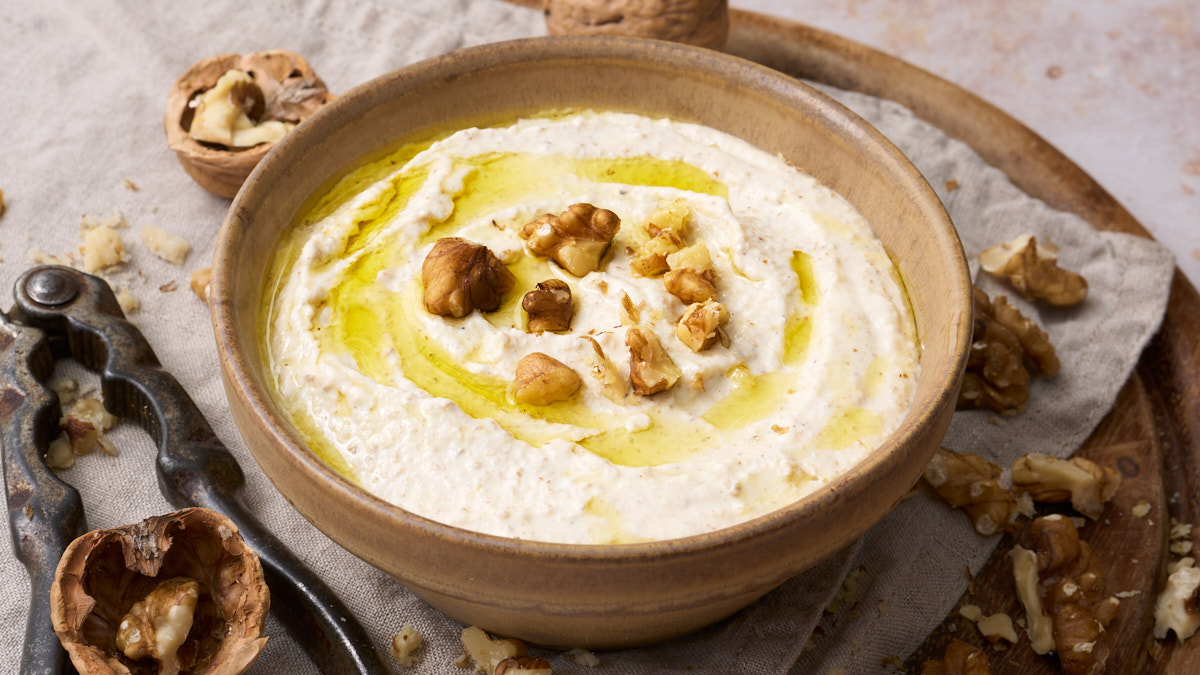
Salsa di noci is a walnut sauce from Liguria, on Italy’s north-western coast. It is the traditional partner for Liguria’s filled pansoti pasta, and it has been part of the region’s kitchen for a very long time. The sauce is an emulsion of walnuts, garlic, bread, and olive oil, made cold in a mortar or blender. The flavour is mildly nutty and faintly bitter, with cheese lending a subtle tang. It is creamier and milder than you might expect.
Walnuts in Liguria
The Ligurian interior – the hilly, often forgotten country behind the coastal strip – has grown walnut trees for a very long time. Local food historians have linked the first salsa di noci sauce to the area around San Martino di Noceto, a hamlet above Rapallo on the eastern Riviera, with its walnut groves on the terraced hillsides.
Genovese merchants reaching the Black Sea colonies in the medieval period came across walnut sauces – already common in Persian cooking. Walnuts arrived in Genoa from Persia roughly a thousand years ago, travelling through the Balkans. Today’s salsa di noci is a western adaptation of those older preparations, with Ligurian olive oil replacing the levantine fats, and bread softened in milk replacing acetic elements like vinegar.
Uses of Salsa di Noci
Salsa di noci is a cold sauce. You must not heat it. You make it before you cook the pasta, then leave it in a bowl at room temperature.
After you have cooked and drained the pasta, take a ladleful of the pasta cooking water and stir it into the sauce in the bowl. This thins the sauce to the right consistency and helps it coat the pasta evenly. Add the hot drained pasta to the bowl and toss. The residual heat from the pasta warms the sauce through. Serve immediately.
The sauce will keep, covered with a thin layer of olive oil, in the refrigerator for three to four days.
What else is it used for?
The classic use is pansoti. But salsa di noci appears elsewhere in the Ligurian kitchen.
Corzetti, the stamped round pasta discs of the Levante, are a traditional partner. So is pasta di castagne – chestnut pasta – where the combination of walnuts and chestnuts is considered a classic of the Apennine kitchen, appearing across the inland areas of Liguria, Emilia-Romagna, and Tuscany.
Trofie with walnut sauce is less common than trofie al pesto but not unusual. Some Ligurian cooks spread it on toast, use it as a dip for raw vegetables, or serve it alongside cold roast meats.
Buon appetito! 🇮🇹
More Food from Liguria
Liguria is a region of intense, precise flavours – built on basil, olive oil, anchovies, and the sea.
Buridda di Seppie – Ligurian Cuttlefish and Peas
Pesto di Fave – Fava Bean Pesto
Discover more food from Liguria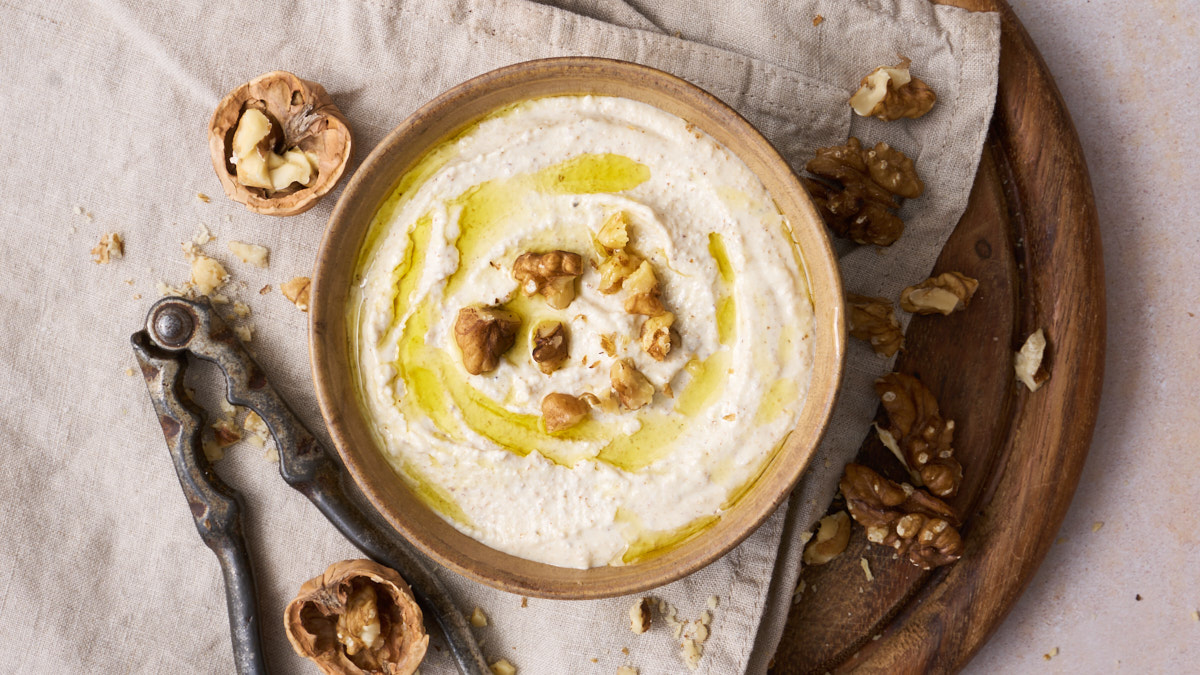
Salsa di noci (Ligurian walnut sauce)
Ingredients
- 200 grams of walnut kernels
- 1 clove of garlic
- crumbs from two rolls
- whole milk
- 3 tablespoons of extra virgin olive oil
- salt to taste
Instructions
- Soak the breadcrumbs in some milk for 20 minutes, then squeeze out the excess milk gently, reserving the excess milk for the next step. The mixture should be be a little wet.
- Add the walnuts to a food processor with the garlic, salt, and breadcrumbs soaked in milk.
- Process the sauce and, little by little, add the oil and milk until you obtain a smooth cream.