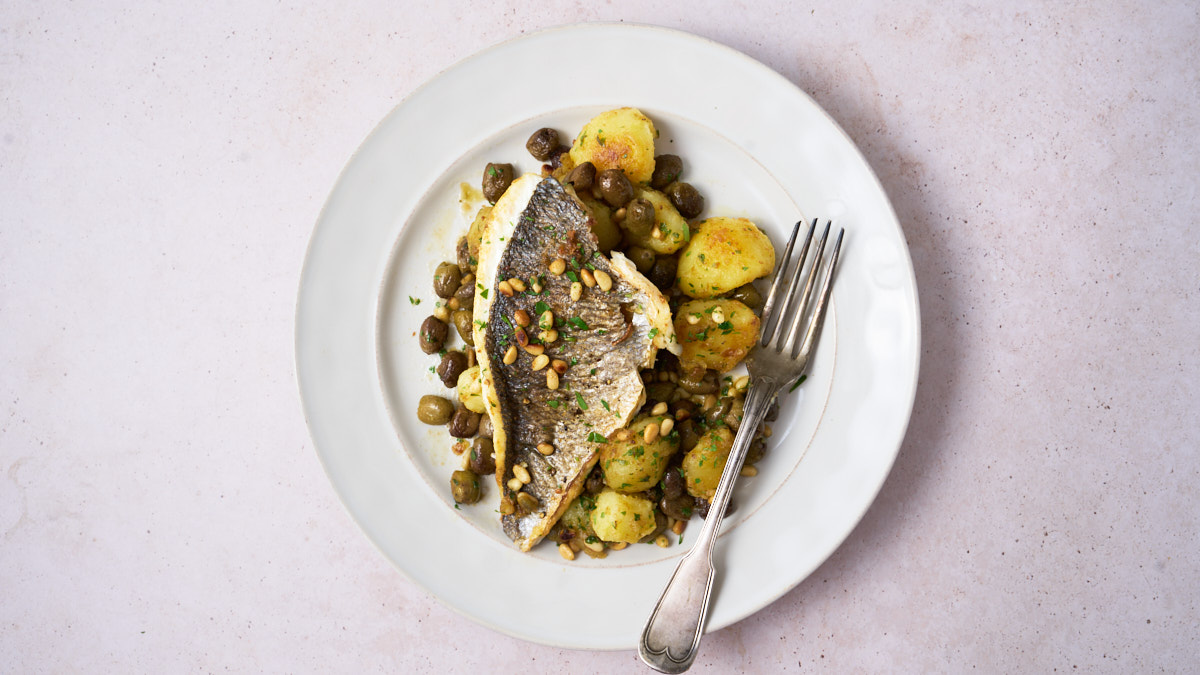
Orata alla ligure is a dish of pan-fried sea bream fillets with Taggiasca olives and toasted pine nuts, served with potatoes. It is one of the characteristic fish preparations of the Liguria coast.
The dish is built on two ingredients that define the region’s cooking: olive taggiasche (Taggiasca olives, small and mild, grown on the terraced hillsides above the Ligurian Riviera) and pinoli (pine nuts, used throughout Ligurian cooking in savoury and sweet preparations alike). Both go into the pan with the fish, and the result tastes completely Ligurian.
What are Taggiasca Olives
Olive taggiasche are small, dark, and low in bitterness compared to most Italian olives. They hold their texture in the pan rather than collapsing, and they release a mild, grassy oil as they warm. The olive takes its name from Taggia, a town in the Ligurian Ponente (western Liguria) near Imperia.
Why Pan Fry Orate Filets?
If you pan fry a fillet version it will be much quicker than a baked whole fish. You also dont have to worry about the bones. The fillets go skin-side down in a hot pan, the olives and toasted pine nuts go in once the skin is crisp, and the whole thing is done in under fifteen minutes. The skin stays crisp where a whole fish in the oven tends to steam it soft. You get all the flavour of the baked preparation with a better texture on the fish.
Ligurian Flavours
Olive taggiasche and pinoli are the two ingredients that place this dish firmly in Liguria. Both appear throughout the region’s cooking – in pasta sauces, in stuffings, in fish preparations along the whole coast – and their combination with pan-fried white fish is a characteristic of the Ligurian table.
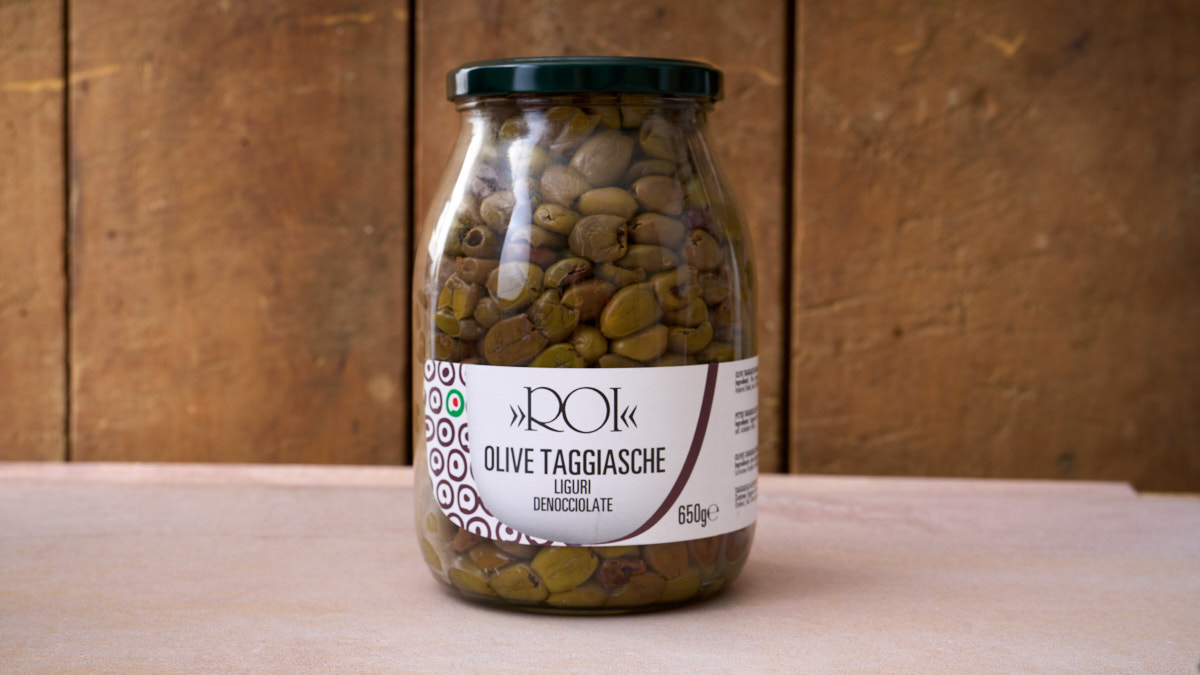
Olive taggiasche carry the most weight in this dish and repay proper sourcing. They should be in olive oil or lightly brined – not in vinegar – and pitted. A good Italian deli will stock them. If you cannot find Taggiasca specifically, use small Kalamata olives as the closest substitute in flavour profile, though the result will be sharper and less mild.
Toast the pine nuts dry in a small pan before you start cooking the fish. Pine nuts go from pale to burnt fast – one to two minutes over medium heat with constant movement is enough. Set them aside and do not add them to the pan until the very end or they will overcook and turn bitter.
To make the best Orata alla ligure, the fish skin needs to be dry before it goes into the pan. Pat the fillets firmly with kitchen paper. A wet fillet will steam rather than sear, and you will lose the crispness that makes this preparation work. Ideally, fillet your fish ahead of time and leave uncovered, skin side up in the fridge for an hour to really help dry out the skin.
Buon appetito! 🇮🇹
More Liguria Recipes
- Funghi alla Genovese – sauteed mushrooms in the Genoese style with butter, olive oil, garlic and fresh oregano.
- Pesto di Fave – Ligurian fava bean pesto, a spring alternative to the classic basil pesto.
- Asparagus Risotto – a creamy Ligurian asparagus risotto, simple and seasonal.
Filetti di Orata alla Ligure (Pan-Fried Sea Bream with Taggiasca Olives and Pine Nuts)
Equipment
- Large frying pan (28-30cm), non-stick or stainless steel
- Medium saucepan for boiling potatoes
- Small dry frying pan for toasting pine nuts
- Fish spatula or wide palette knife
- Kitchen paper
- Chopping Board
- Sharp knife
Ingredients
- 2 sea bream fillets (skin on, each approx 180-220 grams)
- 300 grams waxy potatoes (peeled and cut into 1cm rounds)
- 80 grams Taggiasca olives (pitted)
- 30 grams pine nuts
- 2 garlic cloves (thinly sliced)
- Small bunch of flat-leaf parsley (roughly chopped)
- 3 tbsp extra-virgin olive oil
- 60 ml dry white wine
- Sea salt and black pepper
Instructions
- Boil the potatoes. Place the potato rounds in salted cold water, bring to the boil, and cook for 8-10 minutes until just tender but still holding their shape. Drain and set aside.
- Heat 1 tbsp of the olive oil in the large frying pan over medium heat. Add the drained potatoes in a single layer.
- Cook for 3-4 minutes, turning once, until lightly golden on both sides. Remove from the pan and set aside. Wipe the pan clean.
- Toast the pine nuts. Place the pine nuts in a small dry pan over medium heat. Move them constantly for 1-2 minutes until golden. Remove from the heat immediately and set aside.
- Pat both orata fillets firmly on both sides with kitchen paper. Season the flesh side with salt and black pepper.
- Heat the pan. Pour the remaining 2 tbsp olive oil into the large frying pan and set over medium-high heat until the oil shimmers.
- Fry skin-side down. Lay the fillets skin-side down in the pan. Press each one flat with the spatula for 10 seconds to prevent curling. Cook without moving for 4-5 minutes until the skin is golden and crisp and the flesh has turned white two-thirds of the way up.Then turn the orata fillets so they are skin side up. Cook for another minute then remove from the pan and rest.
- Add the garlic slices to the pan and let them colour lightly for 30 seconds.
- Scatter the Taggiasca olives and browned potatoes into the pan Let everything warm together for 1 minute.
- Deglaze. Pour in the white wine and let it bubble for 1 minute until the wine reduces by about a third.
- Return the fillets to the pan to hear through for 1-2 minutes.
- Plate. Lay the potatoes as a base on each plate. Place one fillet on top skin-side up. Spoon the olives and pan juices over and around the fish. Scatter the toasted pine nuts and chopped parsley over the top. Squeeze over the lemon juice at the table.
Notes
2. The orata skin must be completely dry before the fillet goes in the pan. Any moisture will cause the oil to spit and the skin will steam rather than crisp.
3. Press the fillet flat immediately when it hits the pan. The fillet will curl as the skin contracts from the heat. Put some greaseproof paper on top of the fillets and add a weight, such as a burger press for crispiest results.