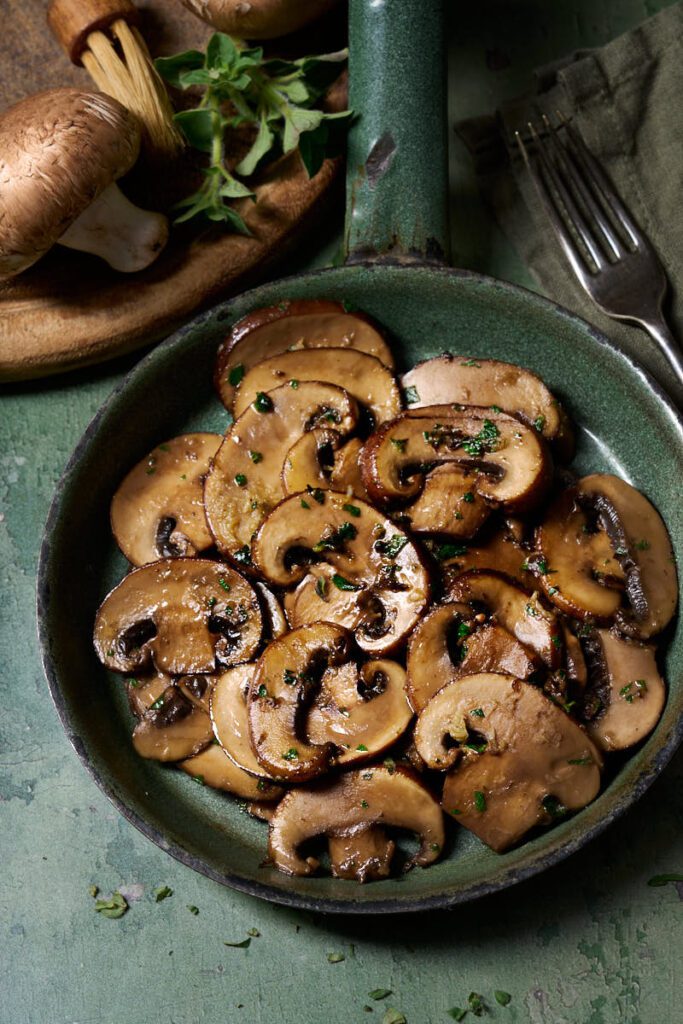
Funghi alla Genovese (sometimes called funghi al funghetto) is one of Liguria’s quiet secrets. It uses just mushrooms, garlic, oregano, butter and olive oil. But get the technique right and it’s one of the best things you’ll eat.
What is funghi alla genovese?
Funghi alla genovese is a simple Ligurian mushroom dish – sautéed in a mix of butter and olive oil, then finished with garlic and fresh oregano. It sits somewhere between a side dish and a starter. You’ll find it across Liguria, especially around Genoa, often served alongside grilled fish or spooned onto bruschetta. Don’t confuse it with the Neapolitan Genovese sauce – that’s a slow-cooked onion and meat ragu and has nothing to do with mushrooms. This dish is something else entirely. Light, quick, and very Ligurian.
The history of funghi alla genovese
Liguria is a narrow coastal strip squeezed between the sea and the Apennine mountains. The terrain is steep and rugged – not ideal for farming. So Ligurian cooking traditionally made the most of what it had. Wild mushrooms grew in the forested hillsides above the coast, and cooks in Genoa and the surrounding villages learned to treat them simply. Oil, garlic, herbs. That was the Ligurian way.
Funghi al funghetto – the other name for this dish – literally means “mushrooms cooked in the mushroom style.” The idea is that the mushroom is allowed to be itself. You’re not drowning it in cream or wine. You’re just coaxing out what’s already there.
What you need – key ingredients
The mushrooms are everything here. Use firm, fresh ones – chestnut mushrooms work very well and are easy to find in any supermarket. Avoid anything that looks slimy or soft. If you can find porcini – the meaty Italian wild mushroom – use them. They’ll take this dish to another level.
The fat is a 50/50 mix of butter and extra virgin olive oil. This is classic Ligurian cooking – you get the richness of butter and the fruitiness of good olive oil in one pan. Use a good quality extra virgin oil, not a bland supermarket blend. It makes a real difference here.
Fresh oregano is the herb of choice. If you can’t find fresh, marjoram is an excellent swap – they’re close relatives and both grow all over Liguria. Dried oregano will do in a pinch, but use half the amount and add it right at the end. It can turn bitter if it cooks too long.
How to make funghi alla genovese – tips and technique
Don’t crowd the pan. If you pile all 500g of mushrooms in at once into a small frying pan, they’ll steam instead of sauté. Use a wide pan – a 28cm frying pan is ideal. Give the mushrooms space to breathe.
Start with medium-high heat. Get the butter and oil hot before the mushrooms go in. Then don’t stir too much. Let the mushrooms sit and develop some colour on the underside before you move them. This is the step most people rush.
The liquid is the key moment. As the mushrooms cook, they’ll release water. Your job is to keep cooking until that liquid has completely evaporated – five to eight minutes. Once it’s gone, the mushrooms will start to fry properly in the fat. That’s when the flavour develops.
Only then do you add the garlic and oregano. This is important. Garlic burns fast. If you add it at the start, it’ll be bitter by the time the mushrooms are cooked. Add it in the last minute, stir it through, and take the pan off the heat. The residual warmth is enough to cook it through without burning it.
Taste before you serve. Season generously – mushrooms can take more salt than you think.
Buon appetito! 🇮🇹
More Liguria Recipes
- Buridda di Seppie – Liguria’s seafood stew of cuttlefish, peas and potatoes. A dish from the fishing villages of the Ligurian coast.
- Pesto di Fave – Ligurian fava bean pesto, a spring alternative to the classic basil pesto.
- Asparagus Risotto – a creamy Ligurian asparagus risotto, simple and seasonal.

Funghi alla Genovese (Funghi al Funghetto)
Equipment
- 28cm wide frying pan or sauté pan
- Wooden spoon or heatproof spatula
- Sharp knife and chopping board
Ingredients
- 500 grams firm fresh mushrooms, cleaned and sliced
- 1 tbsp butter
- 2 tbsp extra virgin olive oil
- 1 clove garlic (minced)
- 1 tsp fresh oregano leaves (finely chopped (or fresh marjoram))
- Salt and black pepper to taste
Instructions
- Clean the mushrooms with a damp cloth and slice them evenly – about 5mm thick.
- Place a wide frying pan over medium-high heat. Add the butter and olive oil and heat until the butter has melted and the pan is hot.
- Add the mushrooms in a single layer. Don’t stir immediately – let them sit for a minute or two to develop colour on the underside.
- Continue to cook, stirring occasionally, for 5 to 8 minutes, until all the liquid the mushrooms release has completely evaporated and they start to brown in the fat.
- Add the minced garlic and chopped oregano. Stir well and cook for one more minute.
- Season generously with salt and black pepper. Taste and adjust.
- Serve immediately.
What to serve it with
Funghi alla genovese works as a side dish alongside grilled fish – try it with sea bass or bream, which are both very Ligurian. It’s also excellent spooned onto thick-cut toasted bread as a starter. Toss it through pasta with a little pasta cooking water and you’ve got a quick weeknight supper. For wine, open a bottle of Vermentino from Liguria – Pigato is the local name for the grape in the western part of the region and it’s a beautiful, slightly floral white that pairs perfectly with the earthiness of the mushrooms.
Can I make this ahead?
You can, and it’s great to add to a cooked breakfast. But it’s best fresh. The mushrooms lose some of their texture as they cool and sit. If you do make it ahead, store it in an airtight container in the fridge for up to two days. Reheat gently in a pan with a tiny splash of water or olive oil to loosen it. Don’t blast it in the microwave – you’ll end up with rubbery mushrooms. This dish doesn’t freeze well. The texture suffers too much.
Frequently asked questions
What mushrooms should I use for funghi alla genovese?
Firm, fresh mushrooms work best. Chestnut mushrooms are the most practical choice in UK supermarkets. They hold their shape well and have more flavour than standard white button mushrooms. If you can find fresh porcini in autumn, use them. A mix of chestnut mushrooms and a few reconstituted dried porcini is a great middle-ground option available all year round.
What does “al funghetto” mean?
Al funghetto means “in the mushroom style” in Italian. It refers to a Ligurian way of cooking mushrooms – sautéed simply in olive oil or butter with garlic and herbs. The same technique is sometimes applied to courgettes in Ligurian cooking. It’s all about letting the main ingredient do the talking.
Can I use dried oregano instead of fresh?
Yes, but use half the amount – about half a teaspoon – and add it at the very end of cooking. Dried oregano is more intense than fresh, and it can turn bitter if it sits in a hot pan for too long. Fresh marjoram is actually the best substitute if you can find it – it’s slightly sweeter and very traditional in Liguria.
Is this dish vegetarian?
Yes. Funghi alla genovese is naturally vegetarian. It uses butter and olive oil, no meat or fish. It’s also gluten-free. If you want to make it vegan, swap the butter for an extra tablespoon of olive oil – you’ll lose a little richness, but it still works well.
Can I add wine to this dish?
You can add a small splash of dry white wine – about 50ml – after the mushroom liquid has evaporated. Let it bubble off for a minute before adding the garlic and herbs. It adds a little acidity and depth. Use a Ligurian Vermentino if you have a bottle open. That said, the dish is perfectly good without it. Keep it simple if you’re making it for the first time.