
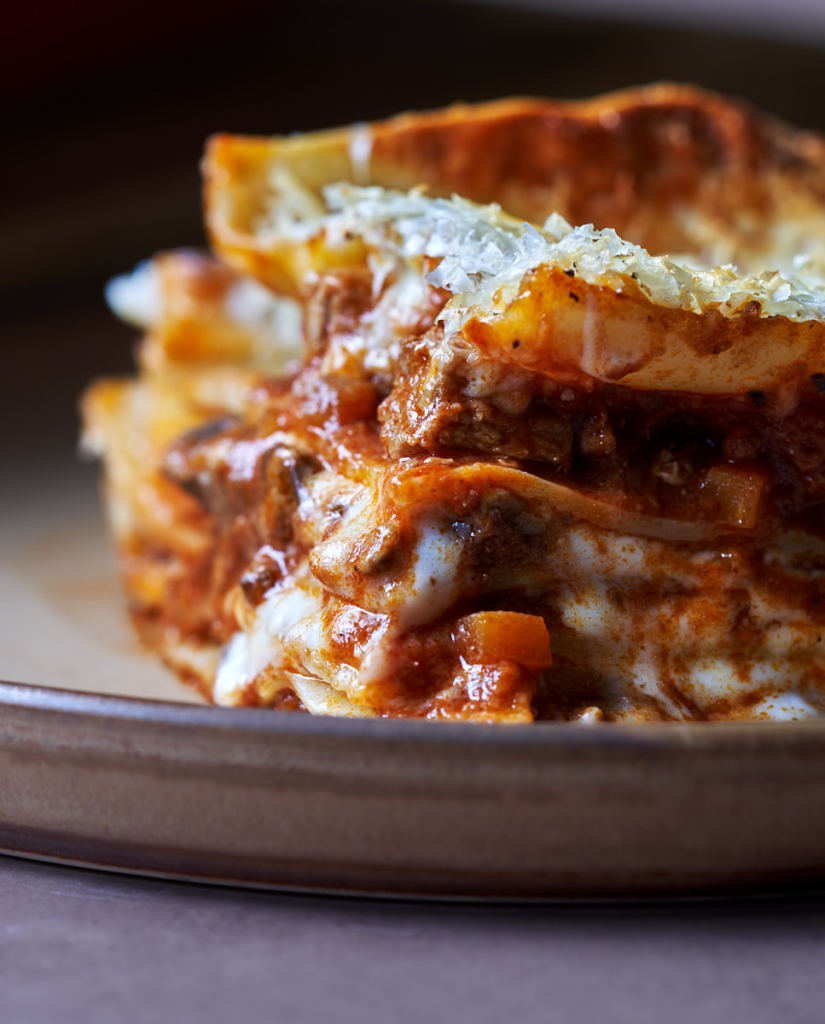
Vincisgrassi is the signature dish of a small town Italian town of Macerata. But it is now synonymous with the whole of Le Marche. The bold flavours from chicken hearts, liver, and gizzards are slow cooked with beef and pork to make a rich ragù. Then layered with béchamel sauce and pasta sheets. Honestly, it is incredible.
Vincisgrassi vs. Lasagna: Key Differences
You would be forgiven for thinking Vincisgrassi is a lasagne. And in fact they are surely related. Lasagne comes from Emilia-Romagna, Le Marche’s northern neighbour. But there are several important differences between the two dishes:
- Ragù Ingredients: the recipe uses a mix of farmyard meats such as goose, duck, chicken, rabbit, and pork chicken giblets. Passata and chicken stock give the sauce a more complex flavour. In comparison, traditional lasagne just uses ground beef.
- Meat Texture: Chopping the meats coarsely results in a more rustic texture. Lasagna typically uses finely minced meat.
- Pasta Layers: Vincisgrassi traditionally only has seven layers of pasta. Lasagna generally has less layers. And the number of layers isn’t so precisely specified.
- Spices: Vincisgrassi includes the addition of nutmeg and cloves to boost the flavour profile.
These differences make Vincisgrassi a distinct dish. As a result it offers a unique taste experience. You really won’t find outside the under-explored Le Marche region.
The History of Vincisgrassi: An Iconic Dish from Marche
The origins of Vincisgrassi are a little murky. Some argue it was named after the Austrian General Alfred von Windisch-Graetz. But there are earlier examples with similar ingredients. This suggests the recipe existed much earlier. It is quite likely that this was just a way of reproducing lasagne from readily available farmyard ingredients. A poor man’s lasagne.
When someone cooked it for Windisch-Graetz to celebrate his victory over Napoleon’s forces in Ancona, the people of Le Marche most probably just seized the opportunity to give the recipe a name as worthy and interesting as its taste.
In doing so, a culinary legend was born. In 2022, the European Commission recognized Vincisgrassi alla Maceratese as a “Guaranteed Traditional Specialty” (STG), highlighting its significance in Italian gastronomy.
Key Ingredients and Preparation
Here’s how to prepare Vincisgrassi:
- Ragù Preparation: Start with a soffritto of celery, carrots, and onions, then add a mix of chopped meats. After browning, deglaze with white wine, add tomato paste, and simmer with chicken giblets until the sauce thickens.
- Homemade Pasta: For an extra traditional feel, make the pasta sheets from eggs and flour, rolled out thin, and boiled. It is very important that you use seven layers of pasta. No more, no less. But feel free to used pre-cooked sheets.
- Layering the Dish: Layer the pasta with ragù, béchamel sauce, and grated cheese, typically Parmigiano-Reggiano. Repeat until the dish is complete, topping with extra béchamel and cheese for a crispy crust. Make sure to let the pasta overhand the corners of the baking tray. They crisp up very nicely and add a wonderful crunch to the dish. The corner slices are best bits.
- Baking: Bake the dish at 180°C for around 30 minutes until golden and crispy.
If you are looking for an authentic regional pasta dish, that most people have never heard of. And that tastes amazing. Vincisgrassi offers a delicious and satisfying alternative to lasagna, with a unique blend of flavors and a crispy finish.
Cultural Significance of Vincisgrassi in Marche
Vincisgrassi is central to Marche food. The people of Marche enjoy it during holidays, Sunday family meals, and festivals. As with many Italian regional recipes, there is no single recipe. Each family has its own version, passed down through generations. And people would always vary the recipe quantities based on what was at hand. The dish’s rich flavors come from its use of various farmyard meats, homemade pasta, and traditional cooking techniques, making it a symbol of the region’s culinary heritage.
Where to Enjoy Vincisgrassi in Marche
If you’re visiting the Marche region of Italy, trying Vincisgrassi is a must. Macerata, in particular, is renowned for its authentic versions.
For a truly immersive experience, go to the Vincisgrassi festival which takes place every June in Monte Urano. Here you can enjoy the dish cooked in a wood-fired oven, just as it has been for generations.
A Traditional Italian Pasta Dish to Savour
Vincisgrassi is more than just a regional Italian dish. It’s a culinary tradition that has been passed down through generations in Le Marche. Vincisgrassi offers a taste of Italy that goes beyond the familiar flavors of lasagna. Whether you’re preparing it at home or enjoying it in Marche, Vincisgrassi is a dish that delivers something very special.
Buon appetito! 🇮🇹
More Marche Recipes
- Potacchio Marchigiana – chicken slow-cooked with tomatoes, white wine, rosemary and garlic. A Marche classic.
- Salsa alla Marchigiana – the distinctive tomato and vegetable sauce of Marche, slow-cooked and intensely flavoured.
- Risotto alla Marchigiana – Marche’s distinctive risotto, built on the region’s own slow-cooked tomato sauce.
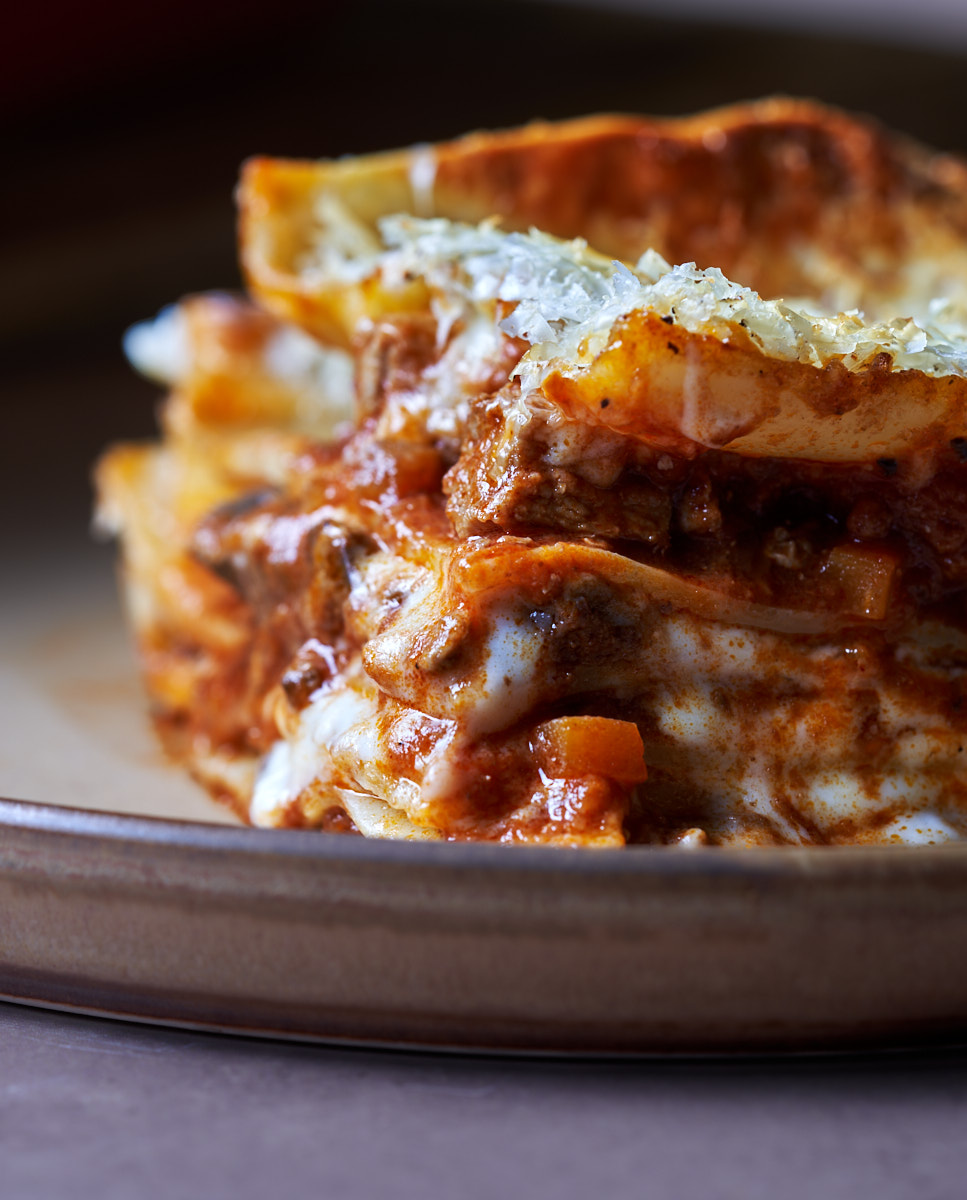
Vincisgrassi
Ingredients
Ragù Sauce
- extra virgin olive oil
- 1 large onion (finely chopped)
- 2 medium carrots (finely chopped)
- 2 celery stalks (finely chopped)
- 2 cloves garlic
- 100 grams prosciutto ((or other smoked ham) chopped)
- 250 grams beef chuck (chopped into small pieces)
- 250 grams pork shoulder (chopped into small pieces)
- 1 tablespoon tomato paste
- 1 L tomato puree
- 300 ml chicken stock
- salt
- 3 cloves
- ½ tsp nutmeg (freshly grated)
- 125 ml white wine
- 400 grams chicken giblets (chicken hearts. livers, gizzards) (roughly chopped)
Bechamel Sauce
- 50 grams butter
- 50 grams flour
- 500 ml milk
- salt (nutmeg)
- Plus
- 500 grams fresh lasagna sheets
Pasta
- 500 grams dried pasta sheets ((or enough to make 7 layers))
- 150 grams parmesan cheese (grated)
Instructions
Prepare the Ragù
- Pre-heat the oven to 180°C
- Heat a few tbsp of extra virgin olive oil in a cast iron pan. Add the onion, celery carrot and garlic and sauté for 8-10 minutes until the vegetables are very soft.
- Raise the heat to medium then add the chopped pork, beef and prosciutto and cook until the meat has browned.
- Add the white wine and the tomato paste to the pan, stir well and cook until the wine has mostly evaporated.
- Add a tsp of salt, the passata, chicken stock, cloves and nutmeg and bring to a gentle simmer.
- Cover with a lid but and cook slowly onion the oven for 1.5 hours, stirring occasionally.
- Add the chopped chicken giblets to the pan and cook in the oven for another 30 minutes.
Bechamel Sauce
- Melt the butter in a small pan then stir in the flour until a roux is formed.
- Add a little milk and stir continuously until the roux has absorbed the milk. Add a little more milk and stir again until absorbed. Continue until half the milk has been incorporated into the roux.
- Add the rest of the milk and a pinch of salt and a pinch of grated nutmeg then stir continuously for about 5 minutes or until the sauce thickens.
Pasta Sheets
- Bring a large pan of salted water to the boil, and carefully add the pasta sheets.
- Boil the pasta sheets for 2-3 minutes each, the drain, and run under cold water to stop the cooking process.
- Put the pasta sheets on a clean tea towel to remove all excess moisture.
Assemble the Vincisgrassi
- Add a very thin layer of sauce to the bottom of casserole dish and cover with pasta sheets.
- Add a layer of meat and then some béchamel sauce, followed my another pasta layer.
- Continue until you have 7 pasta layers in total. Make sure the top layer of pasta overhangs the edges so you get an extra crispy pasta crust.
- Cover with a thin layer of béchamel sauce and the grated cheese
Bake
- Place the casserole dish in the oven and bake at 180°C for 30 minutes, or until the cheese has melted and browned and the overhanging pasta sheets have gone crunchy. Then serve.
2 Comments
Very rustic recipe. Cloves is the key ingredient it completely removes the intestinal flavour from the giblets. I think it would work very well in an ordinary bolognese as well. I had the ragu simmering for more than four hours and let it rest over night. Worked as well…
Thanks Björn! Really glad you enjoyed it! ?