What are Arrosticini?
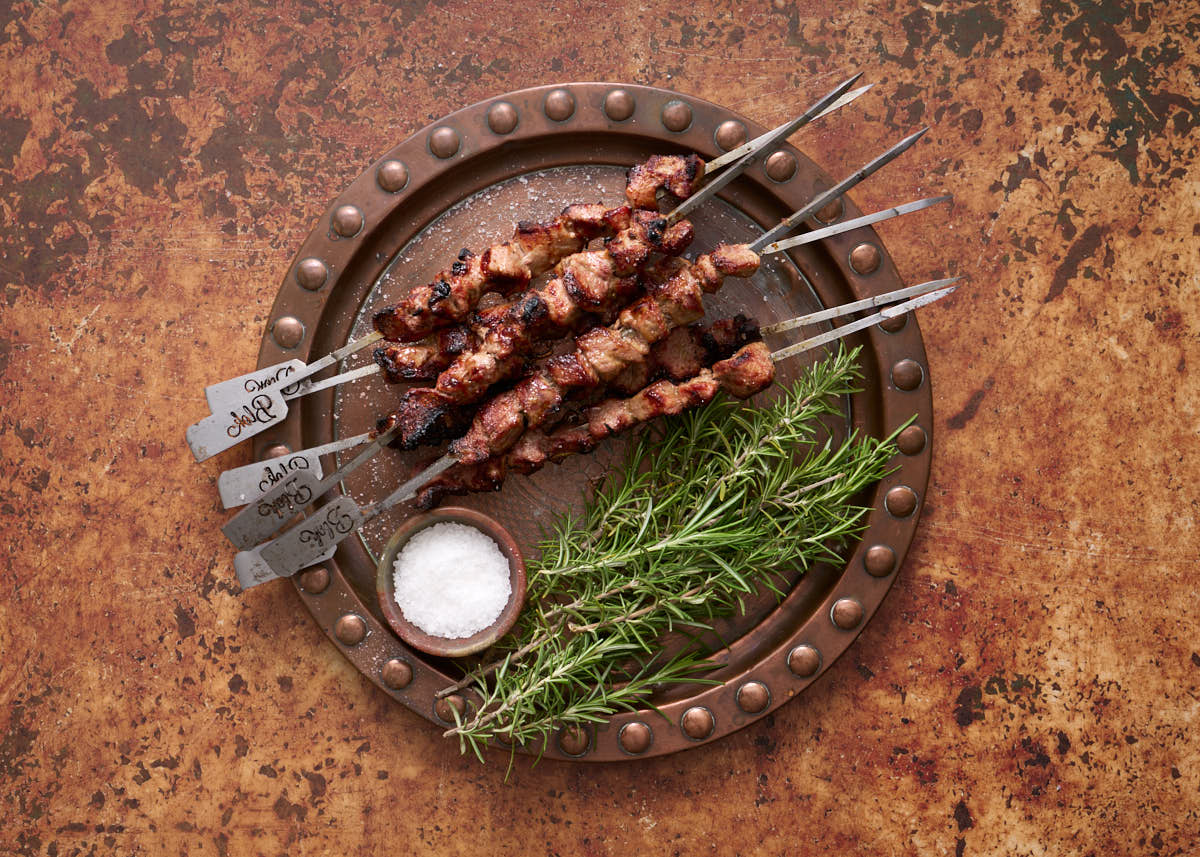
Arrosticini are small skewers of lamb or mutton meat, cut into cubes roughly 1cm on each side, threaded onto thin skewers and cooked fast over charcoal. The name comes from the Italian word arrostire — to roast or grill.
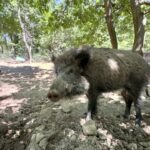
They come from Abruzzo’s pastoral tradition. The region’s economy was built on sheep farming for centuries, and the practice of transumanza. This was the seasonal movement of flocks between mountain pasture in summer and coastal lowlands in winter. And this shaped everything about how people ate here. Shepherds needed food that was quick to cook, portable, and used every part of the animal. Arrosticini fit all three.
The dish is officially listed among Italy’s Prodotti Agroalimentari Tradizionali (PAT) — the government register of protected traditional food products. That is not a small thing. It puts arrosticini in the same company as Parmigiano Reggiano, Prosciutto di Parma, and other dishes that define what Italian food actually is.
In Abruzzo they are known locally as rustelle, rustell’, or arrustell. The name changes depending on which part of the region you are in. Whatever you call them, the rules are the same: sheep or lamb meat, charcoal, salt only at the end, and rosemary. And you must eat them the moment they come off the grill.
The Ingredients
Lamb is the star, so buy the best you can find. You want a cut that has some fat running through it — leg or shoulder both work well. The fat is not optional. Arrosticini really need around 25% fat content in the meat to stay moist and tender on the grill. Lean meat is OK too, but just make sure it doesn’t dry out and go chewy. When you cut your cubes, alternate lean and fatty pieces on the skewer if you can. This is what keeps every mouthful juicy.
If you can, get lamb shoulder from a good butcher. Ask them to leave some fat on. Don’t use lamb mince or pre-diced stewing lamb — you need to cut the cubes yourself to control the fat ratio.
You will also need good extra virgin olive oil, a few sprigs of fresh rosemary, and fine sea salt. That is it. No marinade. No spice blends. The simplicity is the point.
If you want the authentic experience, you can order a fornacella — the long, narrow charcoal grill designed specifically for arrosticini — online. If you do not have one, a cast iron grill pan or a standard charcoal BBQ will do the job.
Tips for Getting it Right
The most common mistake is cutting the lamb too large. One centimetre cubes sounds tiny, but that is the correct size. Bigger pieces do not cook through evenly and the outside burns before the inside is done.
The second mistake is salting too early. The success of the dish depends on adding the salt at the very end of cooking, not before. Salt pulls moisture out of the meat. On small cubes cooking fast over fierce heat, that means the difference between juicy and dry.
The third thing to watch is heat. You want the grill very hot when the meat goes on – this creates the crust that keeps the juices in. Then keep the heat steady and moderate throughout cooking. If the coals flare up, move the skewers briefly to one side. If using a cast iron pan, do not overcrowd it. Cook in two batches if needed and keep the first batch wrapped in foil while you finish the second.
What to Serve with Arrosticini
In Abruzzo, arrosticini come with two things: bread and wine. The bread should be toasted, rubbed lightly with olive oil, possibly a pinch of salt and. This is called lu pane ‘onde(oiled bread) and it is the only condiment the dish needs.
The best wine for a real Abruzzo experience is Montepulciano d’Abruzzo – the region’s great red grape. This fruity, medium-bodied wine has enough grip to stand up to the lamb without overpowering it. If you cannot find it, any young, fruity red – a Sangiovese or a simple Barbera – works well. Avoid anything too tannic or oaky.
Arrosticini in Abruzzo’s Food Culture
The dish sits at the heart of summer life here – cooked at festivals, at roadside stalls, at family gatherings, and at the agriturismi (farm restaurants) that dot the hillsides around the Majella and Gran Sasso national parks. It is street food and celebration food at the same time.
The fornacella – the long narrow charcoal channel designed specifically for arrosticini – is as common a piece of kitchen equipment in Abruzzo as a frying pan. Families own them. They bring them to picnics. The act of cooking arrosticini is as social as eating them. This dish sits alongside Agnello Cacio e Ova (Abruzzo’s favourite Easter Lamb dish), as one of the defining expressions of Abruzzo’s long relationship with lamb. A relationship that goes back centuries to the shepherds who drove their flocks across the mountains every spring and autumn.
There is also a local legend attached to the dish. The story goes that in the 1830s shepherds on the Piana del Voltigno near Pescara slaughtered an old sheep and, not wanting to waste the tougher meat, cut it small and cooked it on improvised sticks over an open fire. Whether that is literally true or not, it captures something real about the dish: it started as peasant food, as a way of making something extraordinary from something cheap. It still tastes like that – in the best possible way.
Buon appetito! 🇮🇹
More Abruzzo Recipes
Explore the full range of Abruzzo recipes – from Easter lamb to Adriatic seafood.
Discover more food from Abruzzo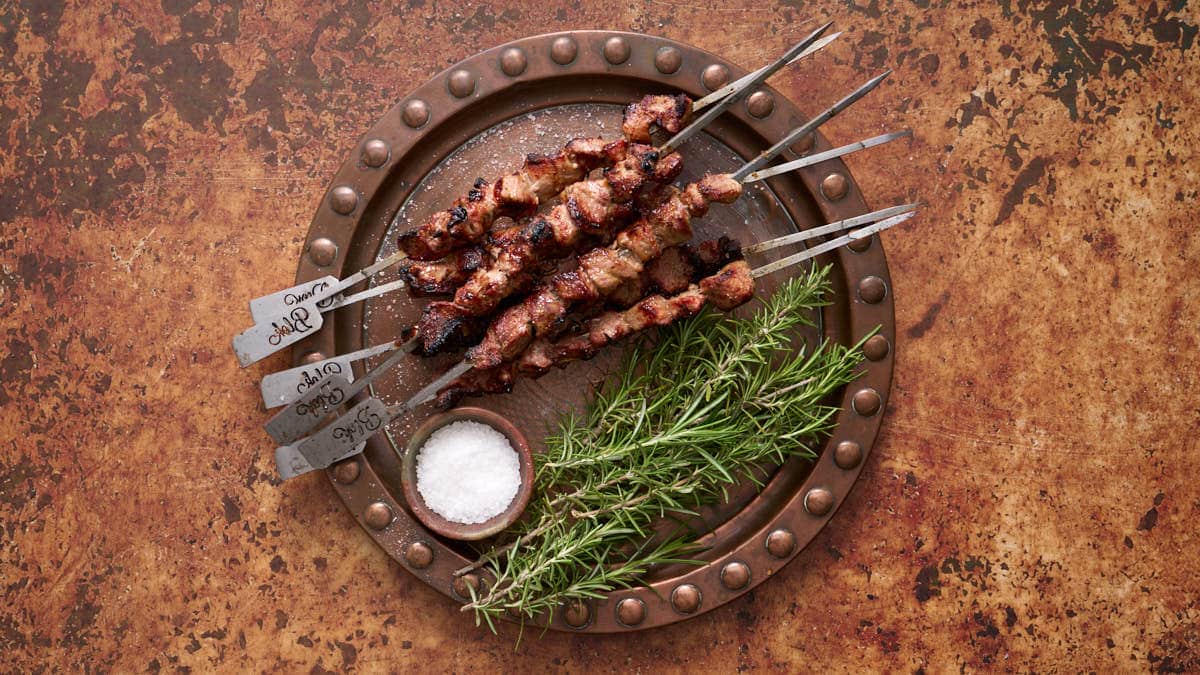
Arrosticini (Abruzzo Lamb Skewers)
Equipment
- Sharp chef’s knife
- Chopping Board
- Wooden skewers (20cm / 8 inch, soaked in water for 30 minutes before use)
- Shallow tray or dish (for resting skewers in oil)
- Fornacella (traditional arrosticini grill) OR cast iron griddle pan OR charcoal BBQ
- Pastry brush or extra rosemary sprig (for basting)
- Small bowl (for the basting oil)
Ingredients
For the Lamb Skewers
- 800 g lamb shoulder or leg (bone removed (fat left on))
- 4 tbsp extra virgin olive oil
- 3-4 fresh rosemary sprigs
- Fine sea salt
- Freshly ground black pepper (optional)
For basting:
- 3 tbsp extra virgin olive oil
- 1 large rosemary sprig
Instructions
- Soak the wooden skewers in cold water for at least 30 minutes before you start. This stops them burning on the grill.
- Using a sharp knife, cut the lamb into cubes of roughly 1cm on each side. Do not trim all the fat away – you need some fat in every skewer to keep the meat moist. As you cut, keep the fatty pieces separate so you can thread them strategically.
- Thread 6-8 cubes onto each skewer, alternating lean pieces with fattier ones. Do not pack them too tightly – leave a tiny gap between cubes so heat can reach all sides.
- Lay the skewers in a shallow tray. Drizzle the olive oil over them, add the rosemary sprigs, and season with a little black pepper if using. Leave to rest for 30 minutes at room temperature. Do not add salt yet.
- Mix 3 tbsp olive oil in a small bowl. Dip a rosemary sprig into it. This is your basting brush – the traditional way to add fragrance during cooking without overpowering the meat.
- Whether you are using a fornacella, cast iron pan, or BBQ, the grill needs to be genuinely hot before the meat goes on. On a charcoal grill, wait until the coals are white and glowing. On a cast iron pan, heat it on high for 3-4 minutes until it just starts to smoke.
- Lay the skewers on the hot grill. Cook for approximately 1 minute per side, turning with tongs every minute or so. You are aiming for 6-8 minutes total cooking time. The outside should develop a golden-brown crust. The inside should be just slightly pink – not raw, but not grey all the way through either.
- Every time you turn the skewers, brush them lightly with the rosemary-dipped oil. This adds fragrance without making the meat oily. Do not drench them – a light touch is all you need.
- When the skewers come off the grill, season them immediately with fine sea salt. This is not optional and it is not negotiable – salt draws moisture out of meat during cooking, which makes arrosticini dry and tough. Salt only at the very end, and eat them straight away.
Notes
- Serve with crusty white bread or sourdough, toasted and a glass of Montepulciano d’Abruzzo (or any young, fruity red wine)
- Fat ratio is everything. If your lamb is too lean, the skewers will dry out. Ask your butcher specifically for a cut with fat running through it.
- Do not over-cook. Arrosticini should be slightly pink inside – around 65-68°C if you are using a thermometer. The moment they go grey all the way through, they lose their texture.
- The fornacella or any table top grill is worth buying if you are serious about this dish. Its narrow channel keeps the wooden ends of the skewers away from the heat, which means the sticks do not burn and you can cook 20+ skewers at once.
- Arrosticini do not keep. Make them, eat them immediately. Do not reheat.