What is cinghiale?
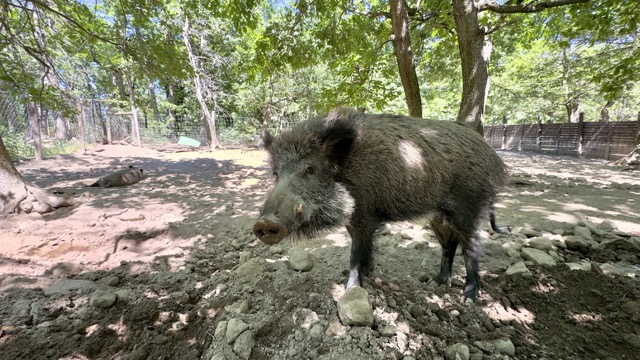
Cinghiale is the Italian word for wild boar – a stocky, bristle-covered relative of the domestic pig that has lived in Italy’s forests and been eaten here for thousands of years. In Tuscany, it’s not unusual. It’s everywhere.
The meat is darker and richer than pork, with a deeper, gamier flavour that’s unmistakably wild without being overpowering. There’s less fat than on a domestic pig, which makes slow cooking essential. Give it time and it becomes tender, complex, and deeply savoury. Rush it and it’s tough.
Where does it live?
The Maremma – Tuscany’s wild coastal hinterland – is the heartland. Oak woodland, scrub, marsh: wild boar have roamed it for centuries. But the Crete Senesi, the forests around Monte Amiata, and the Casentino in eastern Tuscany are all hunting country too.
Tuscan hunters take the season seriously. Cinghiale hunting runs roughly from October to January, which is why wild boar dishes dominate autumn in Italy and winter menus. In summer you’ll still find it – usually farmed boar – but the season is when it tastes best.
How do Tuscans cook it?
There are three main preparations, and all three are worth trying.
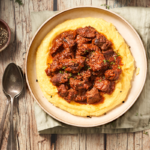
Ragù is the most famous. Shoulder or leg is cut into rough cubes, marinated overnight in red wine with juniper, bay, rosemary and garlic, then braised low and slow until it falls apart. The wine and the juniper are what give it its distinctive character. Served over pappardelle or pici, it’s one of the great pasta sauces of Italy.
In agrodolce – sweet and sour – is less well known outside Tuscany, but older than the ragù tradition. The cooked boar is finished with red wine vinegar and a little sugar, sometimes with pine nuts and raisins. It sounds odd. It works brilliantly. The sweetness cuts right through the richness of the meat.
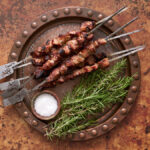
As salumi – cured meats – wild boar shows up in Tuscan delis as salame di cinghiale, a coarse-ground salami with a pronounced gamey flavour, and as prosciutto di cinghiale, air-dried and sliced thin. Both are worth seeking out at any Tuscan market.
Cooking cinghiale at home
You don’t need a Tuscan hunter or a village macelleria. Wild boar is increasingly available online and from good butchers – usually frozen, but perfectly fine for slow-cooking. If you genuinely can’t find it, pork shoulder works as a substitute, though you’ll lose some of the flavour.
The key is the overnight marinade and long, unhurried cooking. Don’t try to shortcut either. The wine draws out the gaminess and tenderises the meat. The slow braise builds the depth of flavour that makes the dish what it is.
Recipes to Try
- Tuscan Wild Boar Ragù with Pappardelle – the classic Tuscan preparation.
- Wild Boar Ragù – a broader Italian version of the dish.
- Friuli Wild Boar in Umido – marinated in white wine and vinegar, served with polenta.
Explore Tuscany
Wild boar is one of the defining flavours of Tuscan cooking. Discover more of the region’s food – its ingredients, dishes, and recipes – on the Tuscany hub.
Explore more food from TuscanyAutumn in Italy
Wild boar is one of the clearest signs the season has turned. See how it fits into the rest of Italy’s autumn cooking.
Explore the Italian Autumn Guide