In This Guide
Friuli food is distinctive and shaped by a mix of Alps, Adriatic and Central European cultures. Signature dishes include jota – a bean and sauerkraut soup, frico – a potato and cheese pancake, and strucolo de pom – a sweet rolled pastry packed with apple or plum jam. These dishes show how the region brings together Italian, Austrian, Slovenian and Hungarian flavours.
Friuli-Venezia Giulia sits in Italy’s far north-east, squeezed between mountains, sea and three borders. Many travellers skip it because more famous regions grab the spotlight. That is a mistake.
I only discovered Friuli by chance. When we moved to Hungary, we wanted to reach Italy without flying with two young kids. A five-hour drive felt doable. Friuli sat on that route. That first trip changed everything. Friulian food surprised me at every turn. It felt Italian, but also not. Familiar, yet new. That contrast kept me coming back.
Locals call the region Friuli for short. Austria sits above it. Slovenia is to the right. Veneto presses in from the west. With neighbours like these, the cooking borrows ideas from everywhere. Many dishes carry Austrian comfort, Slovenian earthiness and Hungarian spice. But the heart is still Italian.
This Friuli Food Guide gives you a look at the dishes, traditions and ingredients that define Friulian cuisine. It sets the scene before we dive into the past that shaped it.
What is Friulian Food?
Friulian food blends Alpine, Slovenian and Italian flavours. The dishes are built on beans, sauerkraut, herbs, cheese and preserved meats. In fact in some parts of region you might not realise you were looking at an Italian menu.
Most people have never heard of Friuli. Maybe they have heard of Trieste, or the Udinese football club. But very few people know anything about the food. While Tuscany and Veneto fill up with tourists, Friuli sits quietly in the north-east, largely undiscovered.
That is a shame. Friuli is the fourth smallest region in Italy. The landscape changes quickly as you drive – mountains, hills, plains and coast all within a short distance. Most of the region only became part of Italy in 1918. That history, and that geography, have created a remarkable cuisine. Many dishes here are as much Austrian, Slovenian and Hungarian as they are Italian.
Explore Friuli Recipes
Looking for Friuli recipes? Browse the full collection – from mountain soups to Adriatic seafood.
See all Friuli RecipesHistory of Friuli Food
To understand why Friulian food tastes so different from the rest of Italy, you need to look at the region’s past. Every empire and every border shift left something on the plate.
Roman Influence
The Romans valued Friuli for its access to the Adriatic and its easy routes into Central Europe. They brought winemaking skills, olive growing and a love of herbs. Flatbreads, fish stews and simple dishes spread through the region. Many of these early flavours are still part of Friulian food today.
Venetian Rule
From the 15th to the 18th century, much of Friuli came under the Venetian Republic. This pulled Mediterranean flavours into the region. Seafood became central. Polenta spread north. Dishes like risi e bisi made their way into local kitchens.
Austro-Hungarian Control
In the late 1700s, Friuli became part of the Habsburg Empire. This period changed the food more than any other. Austrian dishes, Slovenian techniques and Hungarian spice all arrived. Goulash, sauerkraut and slow-cooked stews became part of everyday cooking. Over time these merged with Italian habits and shaped a cuisine that still defines Friuli today.
From World War I to Modern Day
Friuli joined Italy in 1918, but the scars of World War I shaped eating habits for decades. People relied on tough crops like turnips, corn and beans. After World War II, Friuli rebuilt itself around food and farming. Today the region embraces its mixed heritage. Dishes like jota, cjarsons and strucolo de pom carry echoes of every culture that passed through.
Friulian food blends Italian, Slovenian, Austrian and Hungarian traditions into a rich, distinctive gastronomic identity. Dishes like jota, cjarsons and strucolo de pom carry echoes of every culture that passed through.
The Most Famous Friuli Dishes
- Jota – the thick winter soup of beans, sauerkraut and smoked pork.
- Cjarsons – sweet-savoury filled pasta from the mountain valleys of Carnia.
- Strucolo de Pom – a rolled pastry filled with apple or plum jam.
- Frico – Montasio cheese and potatoes fried until golden and crisp.
- San Daniele Prosciutto – cured ham from the hill town of San Daniele del Friuli, sweeter and more delicate than Parma.
Friuli’s Provinces
Friuli is divided into the following 4 administrative areas. And each of them have their own local dishes which contribute to the overall collection of Friuli food culture and cuisine.
Trieste

Where is Trieste?
Trieste sits on the Adriatic coast, close to the Slovenian border, and is home to many classic Trieste recipes. It is a gateway between Italy and Central Europe. The administrative region of Trieste includes the city itself and a thin strip of land that runs along the eastern edge of the Adriatic.
About Trieste
Trieste was a major port city under the Habsburg Empire. That history shaped everything about the way the city eats. Austrian and Slovenian influences sit alongside Mediterranean ones. Goulash, sauerkraut and strudel are as much part of Trieste’s food culture as the seafood from the Adriatic. The city also has one of the most distinctive coffee cultures in Italy – the people of Trieste drink more coffee per head than anywhere else in the country and have their own vocabulary for ordering it.
Trieste Recipes
- Jota – the thick soup of beans, sauerkraut and smoked pork that defines Trieste’s winter table.
- Goulash alla Triestina – beef slow-cooked with paprika and onions. Hungarian in origin, Triestine in character.
- Calandraca – the sailor’s stew of Trieste, made with whatever was left in the galley.
- Minestra di Bobici – a late summer soup of sweetcorn, borlotti beans and smoked ham.
Udine
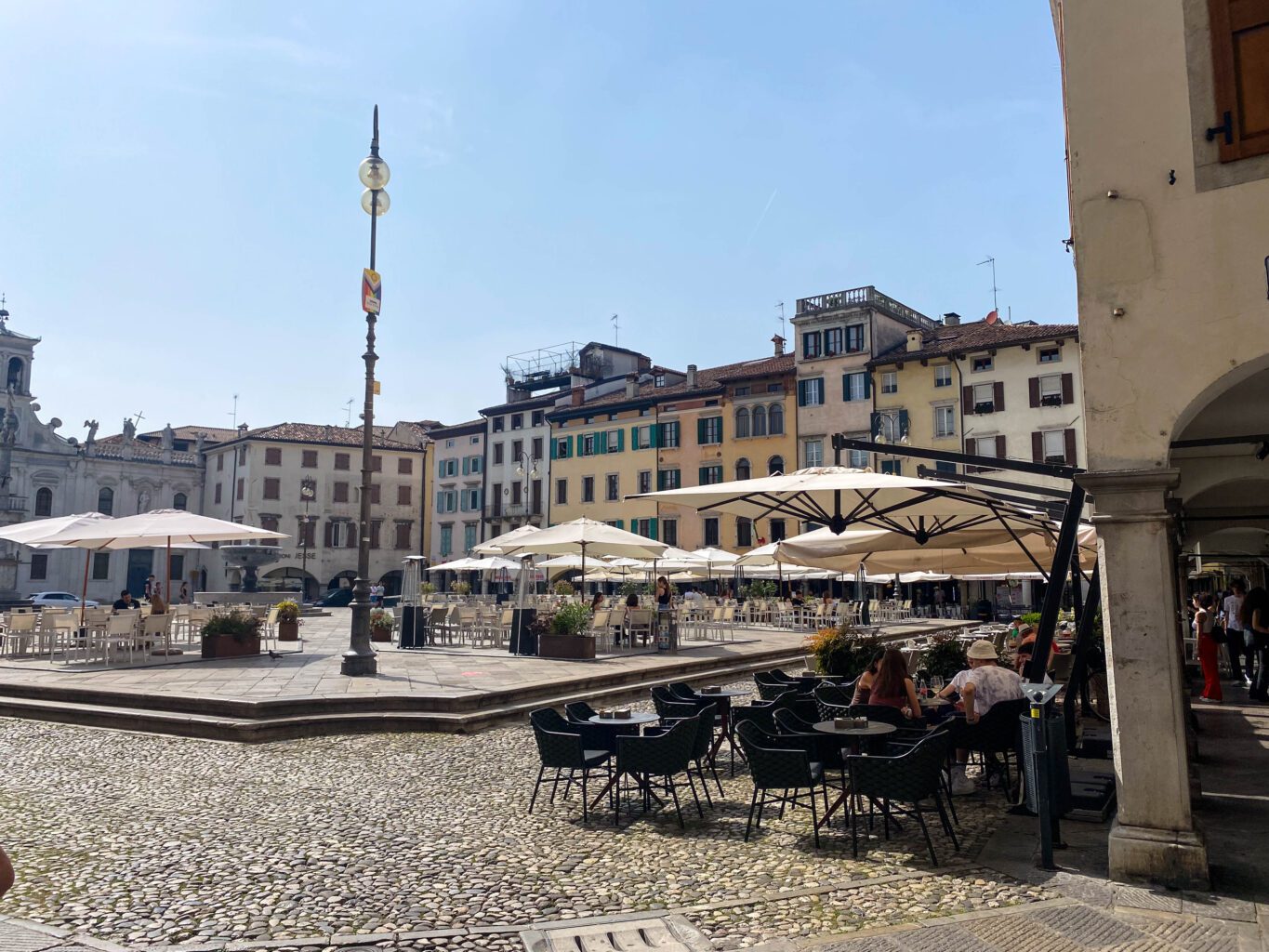
Where is Udine?
Udine sits in the heart of Friuli-Venezia Giulia. Fertile plains and low hills surround the city, making it the agricultural centre of the region.
About Udine
Udine is the working capital of Friuli – not the official regional capital, but the city most Friulians think of as their centre. Its history reflects the two cultures that shaped it most – Venetian rule left its mark on the art and architecture, while the Austro-Hungarian period shaped the food. Dishes like frico and cjarsons are the best examples of what that blend produced. White asparagus from Tavagnacco, just north of the city, arrives in April and disappears by June. During those weeks it appears on almost every table in the region.
Udine Recipes
- Frico – Montasio cheese and potatoes fried until golden and crisp. The defining dish of Udine.
- Friuli White Asparagus with Egg Sauce – white asparagus from Tavagnacco dressed with a warm egg sauce. A spring tradition.
- Orzo e Fagioli – barley and borlotti bean soup. Simple, filling, and eaten across the Udine province all winter.
Pordenone

Where is Pordenone?
Pordenone sits in western Friuli, bordered by Veneto to the south and the Carnic Alps to the north. It is the most Venetian-influenced of the four provinces.
About Pordenone
Pordenone grew as a trading town during the Middle Ages. Its position between Venice and the mountains means the food here draws from both directions – polenta and seafood dishes from the Venetian influence, and heavier meat dishes and smoked specialities from the Alpine north. The most distinctive product of the Pordenone area is pitina – a smoked ball of game meat, cornmeal and spices from the Val Tramontina, a mountain valley to the north of the city. It looks like a small salami but has a flavour entirely its own.
Pordenone Recipes
- Friuli Wild Boar with Polenta – wild boar slow-cooked in the Friulian style, served with soft polenta. Game from the hills above Pordenone.
- Orzo e Fagioli – barley and bean soup eaten across the western Friuli plains.
- Karst Venison with Juniper – venison slow-cooked with juniper berries and mountain herbs from the Carnic Alps.
Gorizia
Where is Gorizia?
Gorizia sits on the Slovenian border in the east of Friuli. The city was divided between Italy and Yugoslavia after World War II. The Slovenian side is now called Nova Gorica. The two cities share a border crossing that was once one of the most tightly controlled in Europe.
About Gorizia
That border history defines the food. Gorizia’s cooking sits between Italian, Slovenian and Austro-Hungarian traditions more directly than anywhere else in Friuli. Slovenian-style dumplings, Austrian pastries and Italian pasta dishes all appear on local menus. The area also produces Radicchio Rosso di Gorizia – a red chicory with a bitter edge that is grown only in this corner of Friuli and is almost unknown outside the region. The wines of the Collio hills, which run along the border between Gorizia and Slovenia, are some of the finest white wines in Italy.
Gorizia Recipes
- Karst Venison with Juniper – venison slow-cooked with juniper berries. A dish from the Karst plateau that sits between Gorizia and Trieste.
- Ajvar – the roasted pepper and aubergine relish that crossed the border from Slovenia and stayed.
- Jota – the bean and sauerkraut soup that appears on tables across the Gorizia province every winter.
Grado and the Adriatic Coast
Where is Grado?
Grado sits on a long, thin island connected to the Friulian mainland by a causeway, jutting into the northern Adriatic between Trieste and Venice. It is one of the oldest continuously inhabited places in Italy – the Romans built a port here, and the Patriarch of Aquileia took refuge on the island in the 5th century when the Huns came. Today it is a small resort town, but the old part of the island – the castrum – still has the tight streets and fishing harbour character of its origins.
About Grado
Grado’s food is the food of the lagoon and the northern Adriatic. Sardines are the backbone of the local cooking – cheap, plentiful and treated with respect rather than disguised. Boreto alla Gradese is the defining dish – white fish cooked simply with white wine vinegar and black pepper, served over white polenta. The vinegar sounds harsh but it is not – it cuts through the fish and creates something clean and direct. The lagoon also produces moeche – soft-shell crabs – in spring and autumn, and a range of small shellfish that appear on menus across the town.
Grado and the Coast
- Spaghetti con Sardine e Pomodoro – sardines, cherry tomatoes and spaghetti. The dish I first ate in Grado and have been cooking ever since.
- Tagliolini al Nero di Seppia con Trota – squid ink tagliolini with smoked trout. An Adriatic coast classic.
- Gamberi San Giusto – prawns cooked in the style of Trieste’s patron saint feast day.
The Diverse Terrain of Friuli
Friuli Food: Mountains
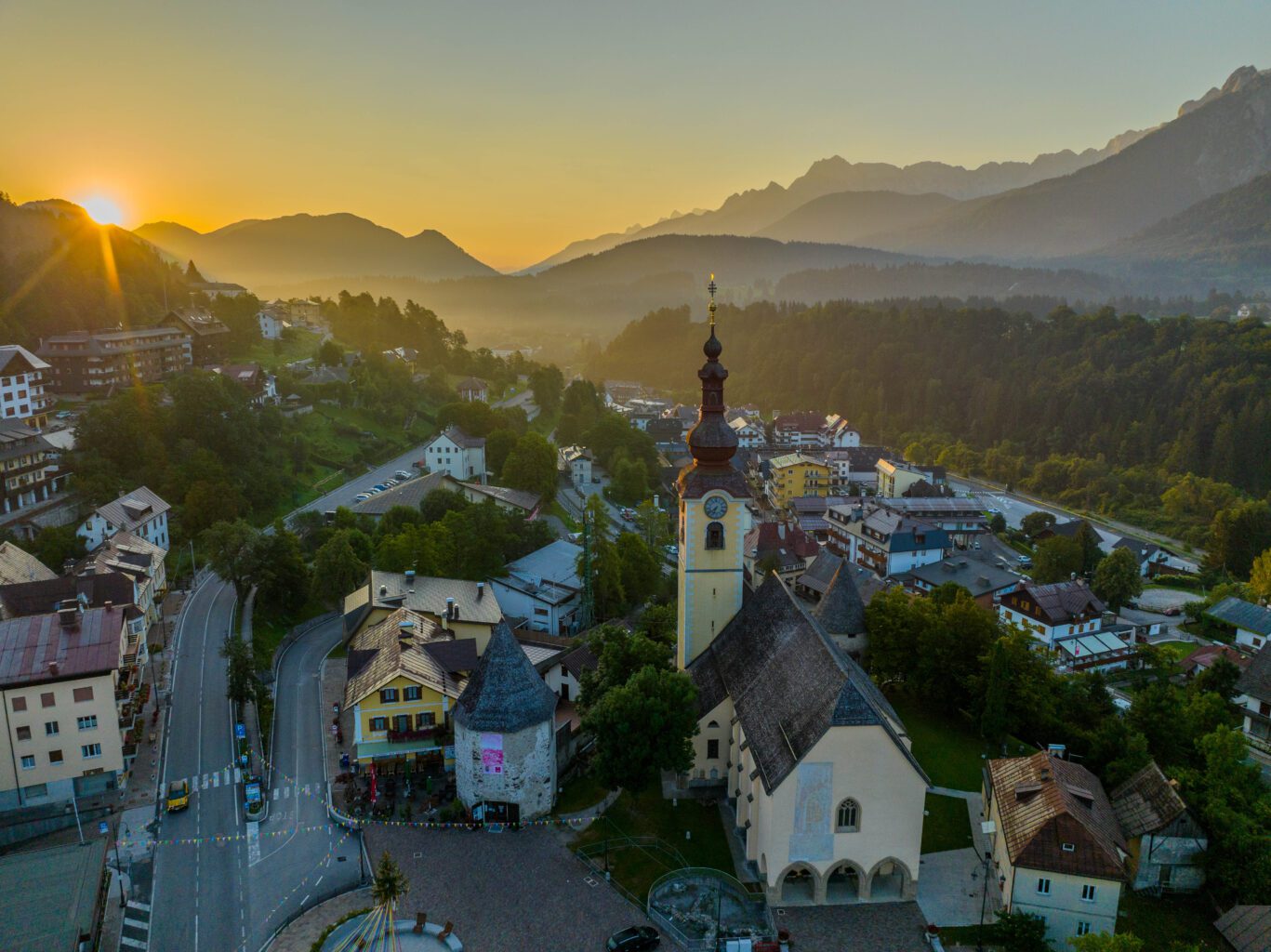
The Carnic and Julian Alps run across the north of Friuli. In the west, along the Pordenone and Udine border, the mountains become the Friulian Dolomites – a UNESCO World Heritage Site and one of the wildest parts of the entire Dolomite range. This is where the food becomes most distinctly Central European. Wild herbs, mushrooms and game are the defining ingredients. Venison and wild boar appear in slow-cooked stews flavoured with juniper berries and mountain spices.
Cjarsons – the sweet-savoury filled pasta of Carnia – come from these valleys. The filling changes from village to village but typically combines potato, herbs, raisins and sometimes chocolate. Montasio cheese is produced in the high mountain pastures and forms the base of frico. Wild mushrooms, including porcini, enhance risottos and pasta dishes across the mountain towns. In autumn the forests fill with them and they appear on menus from September onwards.
Friuli Food: Hills
The Collio and Colli Orientali hills run along the eastern edge of Friuli, close to the Slovenian border. They produce some of the finest white wines in Italy, including Friulano and Ribolla Gialla. The mineral-rich soil and gentle slopes create the right conditions for these grape varieties, giving the wines a character you don’t find elsewhere.
The mild climate also suits olive growing. The oil here has a fruity, slightly sharp flavour. Orchards across the hills produce cherries, apples, pears and peaches – fruit with real flavour rather than the bland supermarket versions most people are used to.
These ingredients find their way into local cooking. Risotto Montasio e Pere – a risotto of Montasio cheese and local pears – is one of the best examples of how the hill produce shapes Friulian food. Simple ingredients, cooked well, with a flavour that is completely of the region.
Friuli Food: Rivers and Lakes
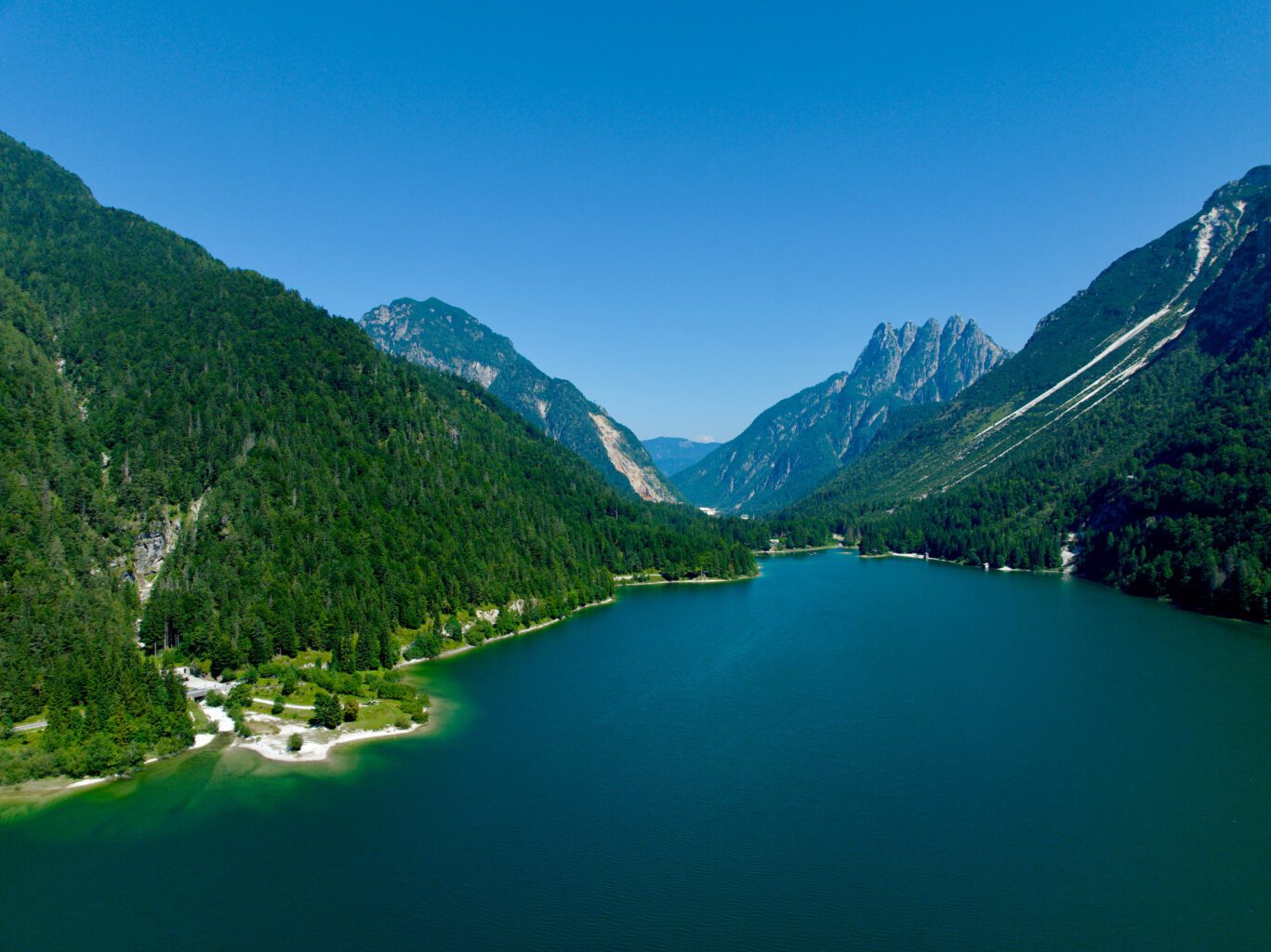
Friuli has two major rivers – the Tagliamento and the Isonzo – plus many Alpine lakes and mountain streams. They provide fresh water for farming and fishing across the region.
The rivers and lakes are full of trout, which appears on menus across the mountain towns and river valleys. Two of the best Friuli trout dishes are Tagliolini al Nero di Seppia con Trota – squid ink pasta with smoked trout – and Trota all’Udinese – trout cooked in the Udine style with butter and herbs.
The riverbanks support rich agricultural land. Corn grows across the plains fed by the Tagliamento, and polenta made from that corn sits at the centre of Friulian cooking. The Isonzo valley supports vineyards that produce wines with a distinctly mineral character, shaped by the river’s geology.
Friuli Food: Coast
Friuli’s Adriatic coastline runs from Grado in the west to Trieste in the east. The sea here is shallow and calm, and the lagoon around Grado is one of the most productive fishing areas in the northern Adriatic.
Sardines are the backbone of coastal cooking – cheap, plentiful and treated with respect. Squid, cuttlefish, clams and mussels all appear on menus along the coast. Spider crabs – granseola – are a Trieste speciality, served simply with olive oil and lemon. Moeche – soft-shell crabs from the lagoon – are eaten in spring and autumn when the crabs shed their shells.
The defining dish of the coast is boreto alla Gradese – white fish cooked with white wine vinegar and black pepper, served over white polenta. The vinegar cuts through the fish and creates something clean and direct. It is almost unknown outside the region.
Spaghetti con Sardine e Pomodoro is the dish I first ate in Grado – sardines, cherry tomatoes and spaghetti, cooked simply and completely of the place. Gamberi San Giusto is another coastal classic – prawns cooked in the Trieste style. And Tagliolini al Nero di Seppia con Trota brings the squid ink tradition of the Adriatic together with the freshwater trout of the Friuli rivers.
Friuli Food: Plain
The fertile plains of Friuli stretch across the central part of the region, between the mountains to the north and the coast to the south. This is farming country – corn, wheat, beans and vegetables all grow here in large quantities.
Corn has been central to Friulian cooking for centuries. Polenta – made from ground cornmeal – appears on tables across the region as a side dish, a base for stews and a meal in its own right. The polenta here is made with local corn and tastes different from the shop-bought version most people are used to. Friuli Wild Boar with Polenta and Salame in Aceto con Polenta are two of the best examples of how polenta anchors a Friulian meal.
The plains also produce tomatoes, beans and cabbage – all staples of the Friulian kitchen. Beans in particular run through the cooking here. Jota – the thick soup of beans, sauerkraut and smoked pork – and Orzo e Fagioli – barley and borlotti bean soup – are two dishes that would not exist without the bean harvest of the Friulian plain.
Friuli Food: Karst
The Karst plateau sits to the south of the Friulian plains, between Trieste and the Slovenian border. It is a stark limestone landscape – rocky, dramatic and very different from the fertile plains to the north. The thin soil and extreme temperature swings between day and night create unusual growing conditions that shape everything produced here.
The Karst is best known for its wines – particularly robust reds like Refosco and Terrano, which have a deep colour and a sharp acidity that comes directly from the mineral-rich soil. These wines pair naturally with the smoked and cured meats of the region.
Game is central to Karst cooking. Karst Venison with Juniper is the defining dish – venison slow-cooked with juniper berries and mountain herbs that grow wild across the plateau. Juniper runs through Karst cooking the way tomato runs through southern Italian cooking – it appears in meat dishes, in grappa and in the preserved foods of the area.
The Karst is also home to Jamar – a raw cow’s milk cheese made by the Zidarič family near Trieste. The cheese is aged 70 metres underground in a limestone cave at constant temperature and humidity. It takes at least four months to mature and produces a semi-hard, crumbly cheese with an intense, almost pungent flavour shaped by the cave’s natural conditions and the wild herbs the cows graze on above ground.
Friuli Food: Regional Produce
Friuli’s geography – Alps, hills, plains and Adriatic coastline – creates a range of microclimates that produce some exceptional ingredients. A few of them define the region’s cooking more than anything else.
San Daniele prosciutto is cured in the hill town of San Daniele del Friuli, 20 kilometres northwest of Udine. The combination of cold air from the Carnic Alps and warm breezes from the Adriatic creates a microclimate specific to this town. The hams are salted, pressed into their distinctive guitar shape and aged for a minimum of 13 months. The result is sweeter and more delicate than Parma.
Montasio cheese is produced in the mountain pastures of Friuli and has DOP status. It is a semi-hard cow’s milk cheese – mild and slightly sweet when young, more complex and sharp when aged. It is the foundation of frico, Friuli’s signature cheese and potato dish. It also appears in Risotto Montasio e Pere – a risotto of Montasio and local pears that is one of the most distinctive dishes in the region.

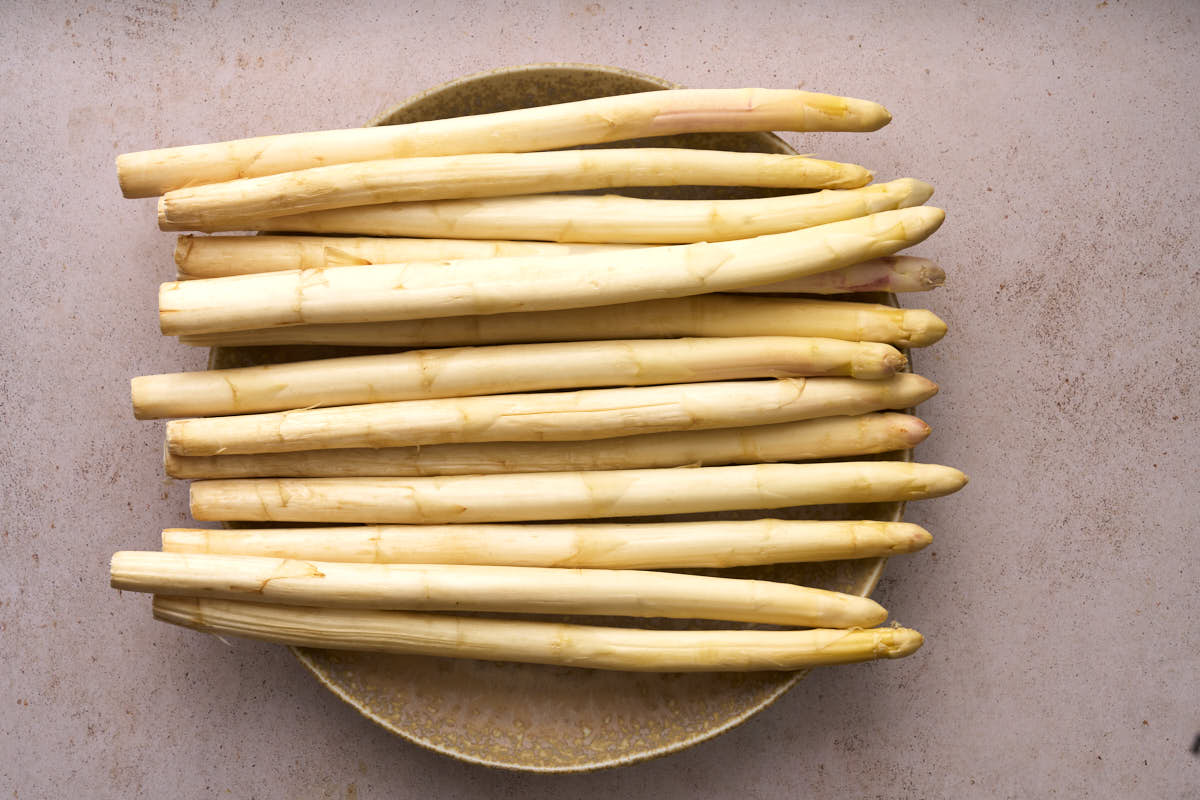
White asparagus grows around Tavagnacco, just north of Udine. Grown underground away from light, the spears stay pale and develop a sweeter, more delicate flavour than green asparagus. The season runs from April to early June. The classic preparation is asparagus cooked in butter with a rough egg sauce, which still appears on almost every Easter table in the region.
Brovada – fermented white turnips – are one of the most distinctive ingredients in Friuli and almost unknown outside the region. The turnips are macerated in red grape pomace for 40 to 60 days, producing something sharp, earthy and completely of this part of Italy. Brovada has DOP status.
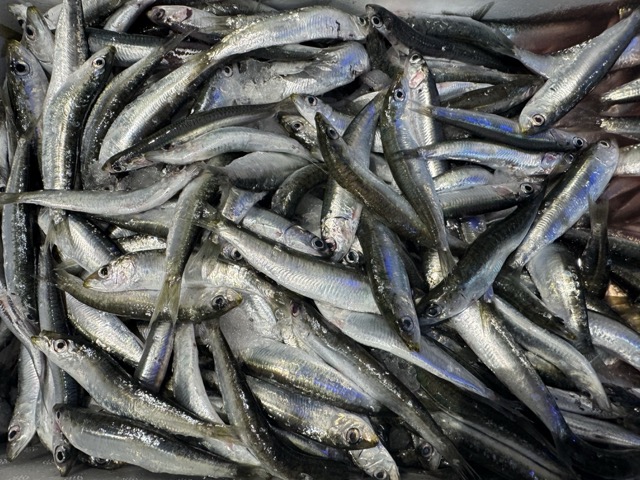
Anchovies from the Adriatic run through Friulian cooking as a base flavour – dissolved into olive oil at the start of cooking rather than used as a topping. They appear in seafood stews, pasta dishes and as a condiment alongside cured meats.
Friuli also produces excellent grappa – the spirit distilled from grape pomace after winemaking. The Friulian style tends toward clean, aromatic grappa rather than the rough versions produced elsewhere. It appears at the end of almost every meal and is sometimes added to coffee in a practice called caffè corretto.
Explore Friuli Food
Friuli-Venezia Giulia is one of the least visited regions in Italy and one of the most interesting at the table. The recipes here draw on Austrian, Slovenian and Hungarian influences as much as Italian ones – and that is exactly what makes them worth cooking. If you are ready to explore, start with the hub.
Discover more food from Friuli