Risi e bisi is a delicious combination of Vialone Nano Rice with fresh Spring peas. You would be forgiven for thinking risi e bisi is a risotto. But what makes it different is its more soup-like consistency, and the puréed pea pods that intensify the pea flavour. Whilst the people of Veneto and Friuli typically make it with Vialone Nano Rice, any risotto rice will work. It’s a great dish to celebrate the arrival of the first the first Spring peas. The rice and peas are then cooked in chicken stock and served with Parmesan cheese.
One of the best things about risi e bisi is its fantastic name. It is so much fun to say! The English translation is rather dull and unappetising: rice and peas. The Italians not only know how to cook. Their beautiful language can make any dish sound inviting and delicious.
Origin of Risi e Bisi
Risi e bisi was famously served to the Doge of Venice at the Feast of St Mark during the Venetian Republic. It might seem odd to serve the head of state rice and peas, but the Feast of St Mark unhappily takes place on the 25th April each year. A time of the year when there is very little fresh produce available. And when anything left in the stores of winter root veg would be well past its best. The last thing the poor Doge wanted was another plate of pumpkin, potatoes and beans.
So enter the humble pea. The harbinger of Spring. Coming to the table at just the right time to appease St Mark and the Doge. Again the Italians taking what is in season, no matter how simple. And turning it into something amazing.
This story has popularised risi e bisi as a Venetian dish. But was it first made for the Doge? Probably not. The dish and the technique are common in the Friuli region as well as the Istrian peninsula in Slovenia. It is more likely that traders brought the dish to the Adriatic region via the Byzantine trading routes of the time. But the Venetians have claimed it. So much so that the local authorities lodged a version of the recipe with Venice Chamber of Commerce.
Risi e Bisi in Friuli
The dish and the technique are common in the Friuli region as well as the Istrian peninsula. Friuli’s connection to this dish runs deep – the region was part of the Venetian Republic for three centuries, and several recipes from those times are still part of Friuli’s regional cooking. In Friuli today, risi e bisi appears on spring tables in the same way it does in Venice, cooked slightly looser than a risotto and tied to the arrival of the first fresh peas. The Venetians claimed the dish, but Friuli never stopped making it.
Buon appetito! 🇮🇹
More Friuli Recipes
- Friuli Wild Boar with Polenta – wild boar slow-cooked in the Friulian style and served with soft polenta.
- Frico – Friuli’s iconic crispy cheese and potato pancake.
- Orzo e Fagioli – barley and bean soup, a warming staple from Friuli’s mountain villages.
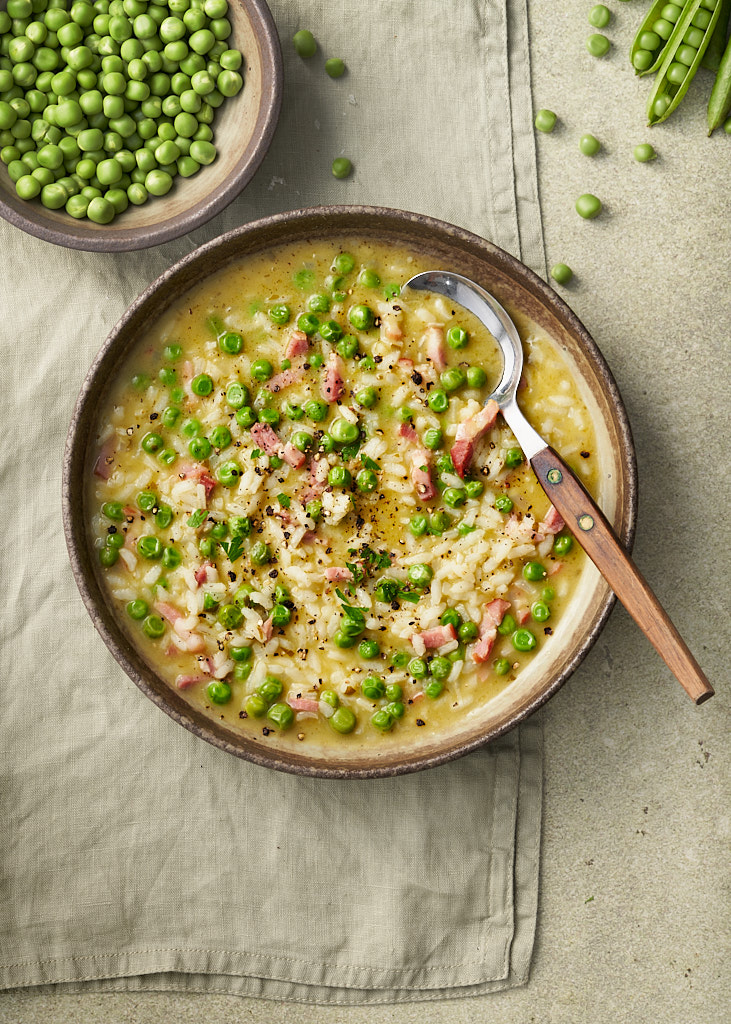
Risi e Bisi
Equipment
- Chef Knive
- Large pot
- Wooden Spoon
- Measuring Jug
- Grater
Ingredients
Pea Pod Stock
- pea pods from 500g fresh peas
- 1 carrot (peeled and halved)
Risi e Bisi
- tbsp butter
- 1 tbsp extra virgin olive oil
- 1 large onion (finely chopped)
- 1 tbsp parsley (finely chopped)
- 125 grams pancetta (cut into small cubes)
- 2 cloves garlic (finely chopped)
- 200 grams Vialone Nano Rice
- 125 ml white wine
- 1 litre chicken stock
- 200 grams fresh peas (shelled from their pods, pods reserved)
- salt (to taste)
- pepper (to taste)
- parmesan (to serve)
Instructions
Pea Pod Stock
- Add the pea pods and carrot into a pan of cold water, bring to the boil and simmer for 45 minutes.
- Drain the pods and carrot, reserving some of the cooking water. Puree the pods and carrot with a blender using some of the liquid then pass through a sieve to achieve a smooth purée.
Risi e Bisi
- Add butter and oil in a pan, and when the butter has melted, add the onion and saute for 5-8 minutes, until the onion is soft and transparent.
- Add the pancetta, garlic and parsley and cook for a few minutes until it turns pink (do not let it brown).
- Add the rice and stir well, making sure the oil and butter coats the rice and sauté over a medium heat for a few minutes to toast the rice grains.
- Add the wine and cook until evaporated by half.
- Add the the stock, pea purée and bring to a simmer, then stir every few minutes.
- Add peas after 15 minutes, and continue to simmer until peas are cooked.
- Add salt and a little pepper.
- When done, stir through a knob of butter and serve with freshly grated parmesan cheese.