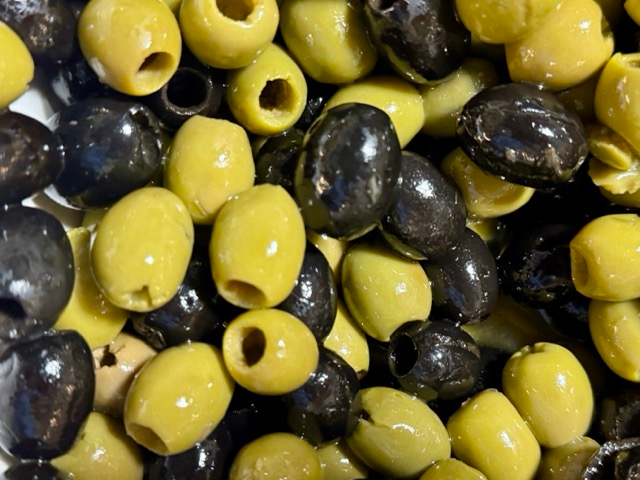
Italy has over 500 olive varieties – more than any other country in the world. Most people never get past ‘green or black’. This regional Guide to Italian Olives covers the most important ones: where they grow, what they taste like, and what Italian cooks do with them.
One thing worth knowing before you start: not all Italian Olives are grown to be eaten. Some varieties are small and thin-fleshed. They are better pressed for oil than eaten whole. Others are large and meaty, and Italian cooks have been eating them for centuries.
Italian Olives by Region
Liguria
Key variety: Taggiasca
Use: Oil and eating
The mildest olive in Italy. Small, dark, and barely bitter. The harvest often runs into January, which lets the fruit fully ripen on the tree. The oil is delicate and buttery – very different from the strong, peppery oils of Tuscany or Puglia.
Taggiasca is good to eat whole. That makes it one of the few small olives that works on the table as well as in the press. In Ligurian cooking it goes into slow braises and stews. The flavour is gentle enough to work with fish and white meat without taking over.
Recipes using Taggiasca
- Coniglio alla Ligure – rabbit slow-braised with Taggiasca olives, pine nuts, white wine and rosemary. The olive is a key ingredient here, not a garnish.
- Stoccafisso accomodato – Ligurian salt cod with olives, pine nuts, potatoes and tomato.
Tuscany
Key varieties: Frantoio, Moraiolo, Leccino
Use: Oil
Most Tuscan olive oil is a blend of three varieties: Frantoio, Moraiolo and Leccino. Each one brings something different. The result is that grassy, peppery oil you will remember from Florence. That catch at the back of the throat comes from harvesting the olives young. It is a sign of good oil, not harshness.
These Italian olives are small and thin-fleshed. They are grown for oil, not for eating. Picking them early means there is very little flesh on each olive. What flesh there is tends to be very bitter. There is no tradition of eating Tuscan olives whole, and no real reason to try. Look for DOP Chianti Classico or DOP Lucca on the label. DOP means both the olives and the pressing happened in that named area.
Umbria
Key variety: Moraiolo-dominant blends
Use: Oil
Umbria is one of Italy’s great olive oil regions. It rarely gets the attention it deserves. The oil is similar to Tuscany – early harvest, robust and earthy – but with its own character. The town of Trevi is considered the olive oil capital of the region.
Like Tuscany, these olives are grown for pressing. They are small and harvested before they are fully ripe. Eating them whole is not the point. If you travel through Umbria, the oil is what to bring home.
Marche
Key variety: Ascolana Tenera
Use: Eating
Marche produces one of Italy’s best eating olives. The Ascolana Tenera is large, tender and mild. These very Regional Italian olives grow around the town of Ascoli Piceno in the south of the region. They have a DOP protection, so the real thing can only come from that one area.
This olive is bred for the table. The flesh is thick and soft, which makes it perfect for stuffing. Pressing it for oil would be a waste. If you have ever had stuffed fried olives at an Italian restaurant and wondered where they came from – this is the answer. Ascoli Piceno, and nowhere else.
Recipes using Ascolana Tenera
- Olive all’Ascolana – the olive stuffed with seasoned meat, breaded and deep fried. One of the few dishes where the olive is the dish, not just an ingredient.
Lazio
Key variety: Itrana – sold as Gaeta olives
Use: Oil and eating
Large, meaty, and good for both pressing and eating. The Gaeta olive takes its name from the coastal town where it is traditionally cured. It has DOP protection. The flavour is slightly bitter and complex, with more flesh than most Italian eating olives. Roman cooks use it the way you might use a good stock – as a background ingredient that adds depth without being the star.
Most puttanesca recipes just call for black olives. The traditional version uses Gaeta. The difference is clear – more body, less brine.
Recipes using Gaeta olives
- Pasta alla Puttanesca – olives, capers, anchovies, tomato. The olive carries the dish.
- Baccala con olive e capperi – salt cod braised with Gaeta olives and capers. A Roman Friday classic.
- Pollo alla romana – chicken braised with peppers and olives.
Campania
Key varieties: Pisciottana, Carpellese
Use: Eating
These varieties are not well known outside Italy. But they are central to the cooking of the Cilento coast. The Pisciottana has ancient roots around the village of Pisciotta. Farmers have grown it there for centuries. The flesh is firm and slightly bitter. It holds its shape well in long, slow braises.
Recipes using Campanian olives
- Coniglio all’Ischitana – Ischia-style rabbit slow-cooked with tomato, olives and white wine.
- Braciole al ragu napoletano – rolled beef braised in Neapolitan tomato sauce with olives and capers.
Puglia
Key varieties: Coratina, Ogliarola, Cellina di Nardo
Use: Oil (Coratina, Ogliarola) – Eating (Cellina di Nardo)
Puglia produces around 40% of Italy’s olive oil. The ancient, gnarled trees are as iconic as the trulli. Some are over a thousand years old. Coratina is the main variety. It makes a strong, peppery but bitter oil when young, which softens over time. Ogliarola is milder.
Coratina and Ogliarola are grown for oil. The fruit is small with very little flesh. Cellina di Nardo is different. It is larger and meatier. You often find it cracked and marinated with wild fennel and chilli. It is worth trying at home.
Recipes using Cellina di Nardo
- Agnello al forno con olive – slow-roasted lamb with olives. A traditional Puglian Sunday dish.
- Ciceri e tria – fried and braised pasta with chickpeas, finished with marinated olives.
Calabria
Key variety: Carolea
Use: Oil and eating
Carolea is a dual-purpose variety. It makes a golden, mild, slightly sweet oil. This is quite different from the strong oils of Puglia, even though the two regions sit next to each other. The olive itself is large enough to eat whole. At home, Calabrians often crack and marinate it with chilli and dried oregano. It sounds simple, but it tastes far better than it looks on paper.
Recipes using Carolea
- Pesce spada alla calabrese – swordfish with tomatoes, olives, capers and chilli.
- Carolea marinate – cracked olives marinated with chilli, dried oregano and orange zest.
Sicily
Key varieties: Nocellara del Belice, Biancolilla, Cerasuola
Use: Eating (Nocellara) – Oil (Biancolilla, Cerasuola)
The Nocellara del Belice is Italy’s most famous eating olive. You probably know it as Castelvetrano, named after the town in the Belice valley where it grows. It is large, bright green and buttery. The flavour is closer to fresh fruit than the salty, briny olives most people are used to. It has DOP protection, so the real thing comes from one specific part of western Sicily.
Nocellara is an eating olive first. The flesh is thick and meaty – too good to press. That is why you find it in Sicilian cooking rather than in the oil mill. Biancolilla and Cerasuola are different – grown mostly for oil. They produce a lighter, more floral oil used in fish dishes along the western coast.
Those big green olives on every charcuterie board? They have a name, a DOP, and a very specific home in the Belice valley.
Recipes using Nocellara del Belice
- Caponata – Sicily’s sweet-sour aubergine dish. The olives add richness against the vinegar and capers.
- Pasta con le sarde – sardines, wild fennel, pine nuts, raisins and olives. One of Sicily’s most distinctive pasta dishes.
- Pollo alla cacciatora siciliana – chicken braised with tomatoes, olives, capers and white wine.
- Olive schiacciate – cracked Nocellara olives marinated with garlic, wild fennel and orange. The simplest way to taste what this olive can do.
Sardinia
Key varieties: Bosana, Tonda di Cagliari
Use: Oil and eating
Sardinia has one of the oldest olive cultures in Italy. Some trees on the island are over a thousand years old. Bosana makes a strong, slightly bitter oil with a character you will not find on the mainland. Tonda di Cagliari is larger. It is eaten as a table olive, usually cured with salt rather than marinated with herbs.
Sardinian olive oil is something locals are quietly proud of. Visitors rarely discover it. If you are travelling to the island, it is worth seeking out.
Recipes using Sardinian olives
- Agnello con olive e finocchietto – lamb braised with olives and wild fennel. A Sardinian classic.
- Malloreddus alla campidanese – Sardinian gnocchi with sausage and saffron, finished with olives in some versions.
Where to buy Italian Olives
A few varieties are easy to find outside Italy. Others need a specialist deli or an online order.
- Nocellara (Castelvetrano) – now in most supermarkets. Look for bright green colour and firm flesh. Avoid anything just labelled “Sicilian olives.”
- Taggiasca in oil – available at Italian delis and online. Usually sold in small jars in olive oil. A good pantry staple.
- Gaeta (Itrana) – harder to find. Worth ordering online if you want to make a proper puttanesca.
- Ascolana Tenera – usually only available ready-stuffed and frozen. For the real thing, look for the raw olive at an Italian deli.
Most people cook Italian food for years without knowing which olive they are using. Once you start paying attention, the food gets noticeably better.
Discover more Italian ingredients
More from the Italian regional pantry:
- Asparagus: an Italian regional guide – where white and green asparagus grow in Italy, how they differ, and what Italian cooks do with them.
- Tripe – a guide to Italy’s most misunderstood ingredient – how different regions approach offal, and why it is worth trying.
- Montasio cheese – the aged cheese of Friuli, and what to cook with it.
Or explore the full Italian ingredients guide for more.