
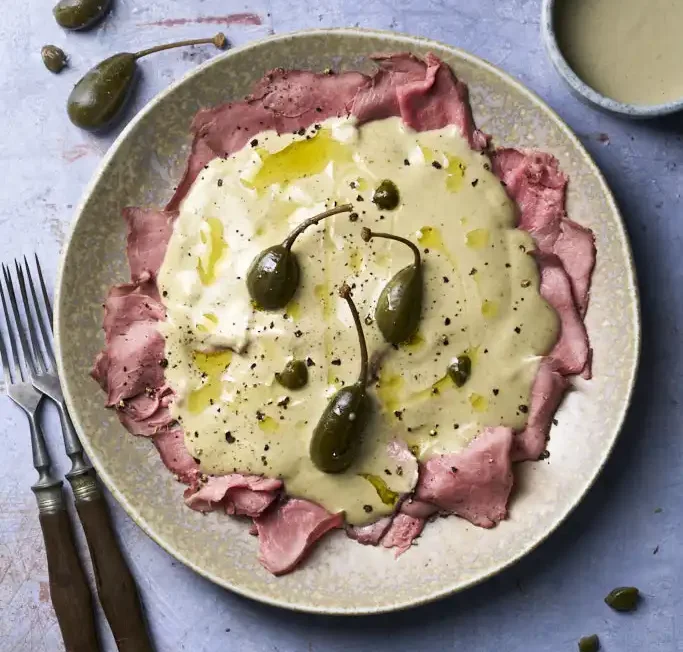
Vitello Tonnato is a unique dish of delicately poached veal dressed sliced very thinly and then dressed in a creamy tuna sauce. When I first looked at this recipe, I raised my eyebrows at the thought of veal and tuna, but the harmony of flavours is nothing short of magical.
Served cold (or slightly warm) as an antipasto, the silky-smooth marriage of tender veal and creamy tuna sauce is something else. For this reason, it is one of Italy’s most iconic culinary treasures. Hailing from the rolling hills of Piedmont in Northern Italy, this regional Piedmont recipe has graced tables for centuries, from rustic farmhouses to Michelin-starred restaurants.
Whether you’re a seasoned cook or a curious food lover, this dish promises to transport your taste buds straight to Italy.
What Is Vitello Tonnato?
Vitello Tonnato (pronounced vee-TELL-oh toh-NAH-toh) translates to “veal with tuna sauce.” In fact, it’s Piedmont’s rather sophisticated attempt at surf-and-turf. At its core, it’s a cold appetizer featuring thinly sliced poached veal smothered in a rich, velvety sauce made from tuna, capers, and anchovies. As a result, the contrast between the delicate meat and the bold, briny sauce is what makes this dish unforgettable.
The distinctive tonnato tuna sauce has mayonnaise like qualities. Tuna forms the underlying flavour, and hard-boiled eggs help provide the creamy texture. The anchovies add a salty punch, and the brightness of the capers cut through the sauce to finish it off. It’s a real showstopper. Traditionally served as part of an antipasto spread, it’s a summer favorite in Italy, though it’s enjoyed year-round during holidays like Christmas and Ferragosto.
The key to this recipe is twofold. Firstly, make sure you cook the veal perfectly. If you overcook the veal, it will become chewy. Secondly, taste the sauce regularly and add ingredients little by little to get the flavour balance you prefer.
The History & Cultural Significance
Origins
- Piedmontese Roots: Vitello Tonnato’s roots trace back to 18th-century Piedmont, a region famed for its veal and bold flavour pairings. The dish likely emerged from cucina povera (peasant cooking), where resourceful cooks combined preserved ingredients (tuna, anchovies) with affordable meats.
- Influence of Preservation Techniques: The use of tuna in the sauce likely stems from the historical practice of preserving fish in oil or salt, which was common in Mediterranean cuisine. This allowed cooks to create flavorful sauces even when fresh seafood was not available.
Evolution
- Aristocratic Beginnings: Initially, vitello tonnato was considered a luxurious dish. The wealthy Piemontese often served this dish at banquets and special occasions. Not only was veal a prized meat, but Piedmont region is not on the coast and so tuna was expensive.
- Popularization: Over time, the dish became more accessible and integrated into everyday Italian cuisine, particularly as a festive antipasto. Its refreshing qualities made it a favourite for summer meals, family celebrations and holiday feasts.
- Modern Adaptations: While the traditional Piedmont recipe remains popular, modern variations sometimes use alternative meats like pork or turkey, and chefs may experiment with the sauce by lemon for extra flavour. Or mayonnaise for convenience.
Equipment and Tools Needed
You will need a few basic kitchen tools, depending on which cooking method you choose:
Traditional Method
- Large Pot: For poaching the veal. A heavy-bottomed pot ensures even heat distribution.
- Sharp Knife or Deli Slicer: Thin, even slices are key. Use a very sharp slicing knife. But a deli slicer works the best.
- Food Processor/Blender: Achieve a silky-smooth tuna sauce.
- Fine Mesh Strainer: For an ultra-refined sauce, use a fine mesh strainer, such as chinois, to pass the sauce.
Sous Vide Method
Cooking the veal sous vide will make sure that the veal is cooked to perfection. If you have a sous vide machine, then I would definitely recommend you use this method.
- Sous Vide Circulator: For precise, foolproof cooking.
- Vacuum Sealer & Bags: If using sous vide. But you can also the air-displacement method with zip-loc bags.
How to Make Vitello Tonnato: Step-by-Step Recipe
Traditional Ingredients
Despite the sophisitcated taste of vitello tonnato, you will only need a few basic ingredients.
- Veal: eye of round or top round (sirloin or rump), with any fat or sinews trimmed away.
- Aromatic Broth: 1 onion, 1 carrot, 1 celery stalk, 2 bay leaves, 10 black peppercorns, 2 cloves.
- Tuna Sauce:
- tinned tuna in olive oil (e.g., Tonnino or Genova brand).
- anchovy fillets
- hard boiled eggs (room temperature)
- extra virgin olive oil
- capers (rinsed)
- chicken stock or water (for adjusting consistency)
Step 1: Poach the Veal
Traditional Method
- Prep the Broth: Fill a large pot with water (enough to cover the veal). Then add chopped vegetables, bay leaves and peppercorns. Bring to a simmer.
- Cook the Veal: Then submerge the veal, reduce heat to a very lower simmer. Simmer gently for 1.5–2 hours. Avoid boiling—it toughens the meat.
- Cool: Turn off heat. Then let the veal cool in the broth for 1 hour to retain moisture. Transfer to the fridge for at least 2 hours.
Sous Vide Method
- Season the veal with salt and pepper and put in a vacuum bag with all the aromatic both ingredients and vacuum seal the bag.
- Using the sous vide circulator, head your sous vide bath to 60°C and cook the veal for 3 hours.
- Remove the veal from the bag, discard the aromatic broth ingredients and allow to cool and dry in the fridge for at least 2 hours.
Step 2: Make the Tuna Sauce
- Blend Base Ingredients: In a food processor, combine tuna, anchovies, capers, egg yolks, then add lemon juice. Pulse until smooth.
- Emulsify: With the processor running, slowly drizzle in olive oil until the sauce thickens. Add broth if too thick.
- Season: Then taste and adjust with salt, pepper, or extra lemon.
Texture Hack: Strain the sauce through a fine mesh sieve for a velvety finish.
Step 3: Assemble & Serve
- Slice the Veal: Use a sharp knife or deli slicer to cut the chilled veal into paper-thin slices.
- Layer & Sauce: Then arrange slices on a platter. Spread a generous layer of tuna sauce over each slice.
- Chill: Refrigerate for at least 4 hours (ideally overnight) to let flavours meld.
- Garnish: Drizzle with olive oil, and sprinkle with a few capers.
Serving Suggestion: Finally pair with crusty bread, grilled vegetables, or bitter greens like arugula as part of an antipasti selection.
Wine Pairing: Pair with a crisp Piedmontese white like Arneis or a light Barbera d’Alba.
Pro Tips for Success
- Chill the Meat: Cold veal is easier to slice thinly.
- Slice As Thin as Possible: the thinner the meat, the more melts in your mouth.
- Quality Matters: Use tuna packed in olive oil and fresh anchovies. And use the best quality extra virgin olive oil you can find.
- Sauce Consistency: Aim for a pourable but creamy texture—like Greek yogurt.
- Prepare in Advance: make this Piedmont recipe a day in advance, and allow the rich tuna flavours to blend with the meat for an extra special dish.
Common Mistakes to Avoid
- Overcooking the Veal: Use a thermometer to keep the poaching liquid below a boil, or preferably cook sous vide.
- Slicing the Veal when Hot: this results in jagged or broken cuts. Slicing the veal when cold makes it much easier to slice thinly and evenly.
- Over-salting the Sauce: Taste before seasoning—anchovies and capers already add saltiness.
Other Uses for Tonnato Sauce
The creamy tuna-based tonnato sauce is incredibly versatile and can be used in a variety of creative ways beyond its classic application. Here are some delicious ideas:
- As a Dip: Serve it as a dip for raw or roasted vegetables, such as carrots, celery, fennel, or bell peppers. Or with breadsticks, crackers, or crostini for a quick appetizer.
- As a Sandwich or Wrap Spread: Use it as a spread for sandwiches, wraps, or paninis. It pairs well with grilled vegetables, chicken, or even hard-boiled eggs.
- With Seafood: Drizzle it over grilled or poached fish, such as salmon, cod, or shrimp, to add a rich, tangy flavor.
- As a Salad Dressing: Thin it out with a bit of olive oil or lemon juice and use it as a dressing for potato salad, green salads, or grain bowls.
- Tonnato sauce’s creamy texture and umami-rich flavor make it a fantastic condiment for enhancing a wide range of dishes. Feel free to experiment and adapt it to your taste!
FAQs
Q: Do I have to use veal?
A: If you can’t find veal or prefer an alternative, you can use:
- Beef round: veal is notoriously hard to find and very expensive. The same cut of beef is perfectly fine.
- Pork loin (a common substitute)
- Turkey breast (for a lighter option)
- Chicken breast (though the flavour will be different)
However, for the most authentic Vitello tonnato, veal is always the best choice.
Q: Can I make Vitello Tonnato in advance?
A: Definitely, in fact his is recommended. Perhaps the best part of this recipe is that it is served cold, and so can be made ahead. In fact, allowing the tonnato sauce a night in the fridge helps its flavours
Q: Can I use leftover roast veal?
A: Absolutely! Leftover cooked veal works, though poached meat is more tender.
Q: What if my sauce splits?
A: Whisk in 1 tbsp hot water or broth which will re-emulsify the sauce.
Vitello tonnato is more than a dish—it’s a celebration of Italian ingenuity. With its creamy-tangy sauce and melt-in-your-mouth veal, it’s a showstopper that’s surprisingly simple to master. Whether you stick to tradition or experiment with modern twists, this classic Piedmontese recipe is sure to impress.
Ready to Try It? Then please share your Vitello Tonnato journey in the comments below! And don’t forget to explore these other amazing Italian recipes.
Buon appetito! 🇮🇹
More Piedmont Recipes
Explore the full range of Piedmont recipes on timransome.com.
Discover more food from PiedmontVitello Tonnato
Ingredients
Veal
- 500 grams veal or beef round (all fat and sinew removed)
- 1 small onion (quartered)
- 1 stick celery (cut into rough chunks)
- 4 peppercorns
- 1 bay leaf
Tonnato Sauce
- 150 grams tinned tuna in oil (drained)
- 75 grams capers (drained)
- 2 hardboiled eggs (quartered)
- 4 anchovy filets
- 150 ml extra virgin olive oil
- salt and pepper
- 4 tbsps chicken stock ((for adjusting sauce consistency))
Instructions
Poach the Veal
Traditional Method
- Fill a large pot with water (enough to cover the veal). Then add chopped vegetables, bay leaves, and peppercorns. Bring to a simmer.
- Then submerge the veal, reduce heat to a very lower simmer. Simmer gently for 1.5–2 hours. Avoid boiling—it toughens the meat.
- Turn off heat. Then let the veal cool in the broth for 1 hour to retain moisture. Transfer to the fridge for at least 2 hours.
Sous Vide Method
- Season the veal with salt and pepper and put in a vacuum bag with all the aromatic both ingredients and vacuum seal the bag.
- Using the sous vide circulator, head your sous vide bath to 60°C and cook the veal for 3 hours.
- Remove the veal from the bag, discard the aromatic broth ingredients and allow to cool and dry in the fridge for at least 2 hours.
Make the Tonnato Sauce
- Combine tuna, anchovies, capers, hard boiled eggs in a bowl and some of the extra virgin olive oil. Pulse until smooth.
- With the processor running, slowly drizzle in olive oil until the sauce emulsifies and thickens. Add broth if too thick.
- Then taste and adjust with salt, pepper.
- Texture Hack: Strain the sauce through a fine mesh sieve for a velvety finish.
Step 3: Assemble & Serve
- Use a sharp knife or deli slicer to cut the chilled veal into paper-thin slices.
- Arrange slices on a platter. Spread a generous layer of tuna sauce over each slice.
- Refrigerate for at least 4 hours (ideally overnight) to let flavours meld.
- Drizzle with olive oil, and sprinkle with a few capers.

