
Friuli's Habsburg Food
The Food that Survived an Empire
Friuli’s Habsburg food tradition contains dishes that have almost nothing to do with Italy. Friuli’s cooking contains dishes that have almost nothing to do with Italy. Stuffed cabbage rolls seasoned with paprika. Pasta tossed with poppy seeds and butter. Potato dumplings filled with whole plums. Bean soups built on smoked pork. These sit comfortably on Friulian tables, yet their roots are Hungarian and Austrian – dishes that arrived centuries ago and became so embedded in everyday cooking that most people no longer think of them as foreign at all.
The explanation is straightforward. From the early 1500s until the end of the First World War, Friuli was part of the Habsburg Empire – the great Central European superpower that stretched from Vienna across Austria and Hungary to the Adriatic coast. Four centuries of shared rule left a permanent mark on what this region eats. When the Habsburg Empire collapsed and Friuli became a part of Italy, the recipes stayed. But they didn’t stay unchanged. Friulians took what they had inherited and gave it an Italian touch – con un tocco italiano, as Italians themselves describe it. Olive oil replaced lard. Wine replaced beer. Mediterranean herbs softened Central European spicing. The bones of the dish remained Habsburg. The flavours became Friulian.
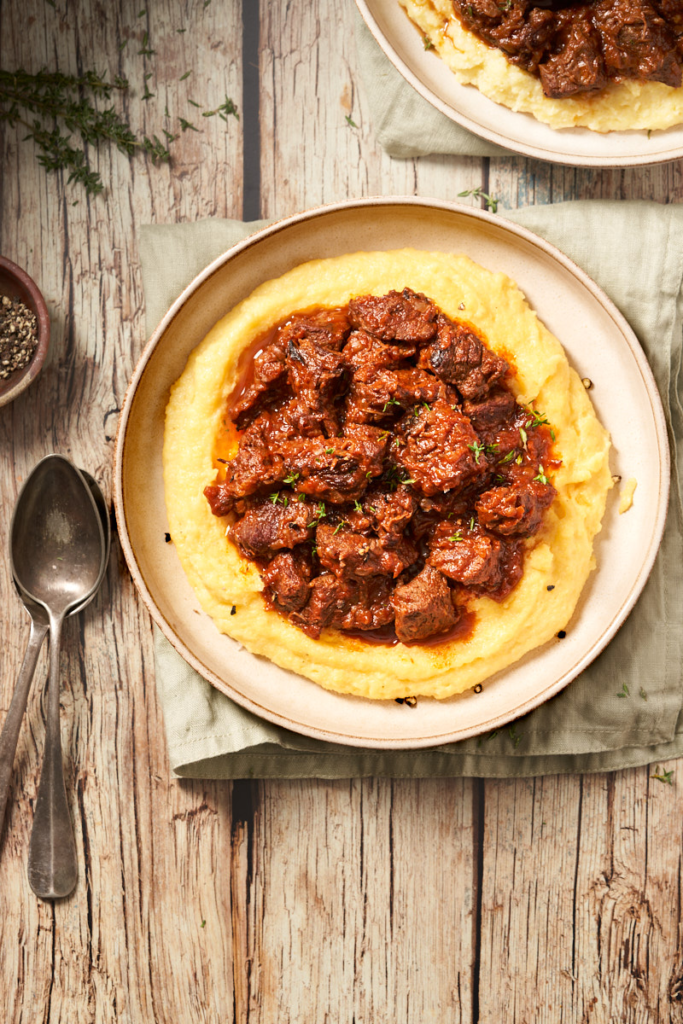
Goulash alla Triestina
Goulash is one of the defining dishes of the Habsburg world, and Trieste has its own version. The Hungarian original – gulyás – is built on paprika, beef, and long slow cooking. This dish have become a a Trieste classic.
The Italian twist: Triestino adds red wine, garlic, and rosemary – none of which appear in the Hungarian original – and uses olive oil rather than lard. The result is noticeably lighter and more aromatic than gulyás, but unmistakably the same dish underneath.

Gnocchi di Susine
Potato dumplings with a whole plum hidden inside, rolled in toasted breadcrumbs and finished with butter and sugar. In Hungary the same dish is called szilvás gombóc and is eaten as a dessert or light meal. In Trieste it is served as a starter before roasted meat – or with coffee, or as a snack. The rules are relaxed.
The Italian twist: This one arrived almost unchanged. The technique, the ingredients, and the logic of the dish are identical to the Hungarian original. Friuli simply gave it a new name and moved it to the start of the meal.
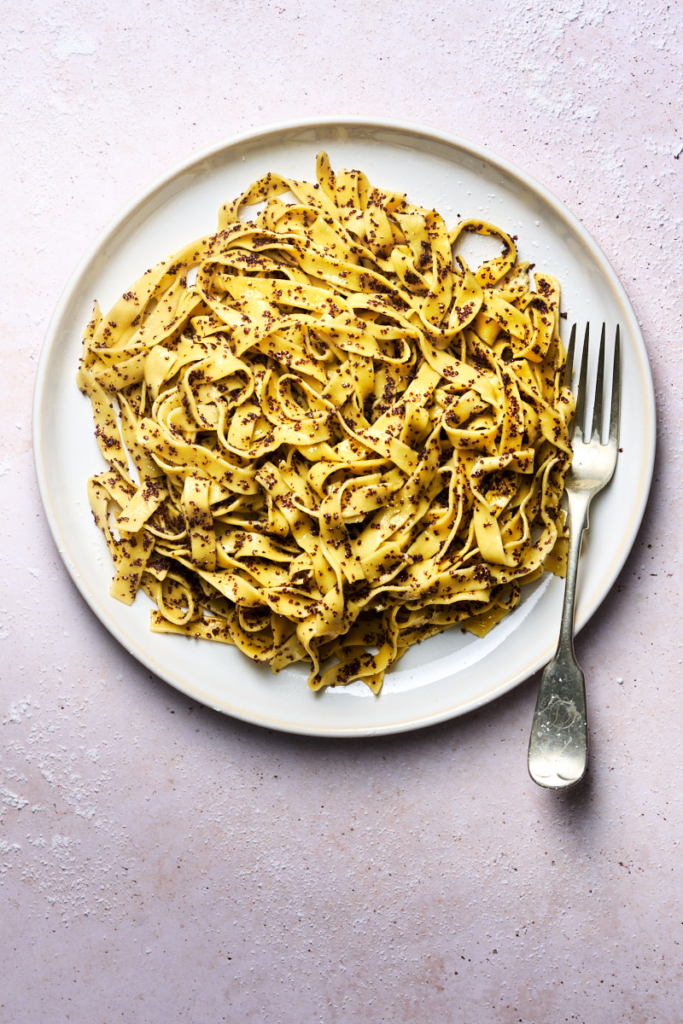
Lasagne ai Semi di Papavero
Wide egg pasta tossed with melted butter, ground poppy seeds, and sugar. No tomato, no cheese, no meat – and served as a first course, not a dessert. In Hungary the same dish is called mákos tészta, made with exactly the same ingredients. It has no precedent anywhere else in Italy.
The Italian twist: Another dish that arrived largely intact. The main difference is the pasta – Friuli uses wide fresh egg pasta made from scratch, which is very much the Italian instinct. Hungary typically uses shorter, dried egg noodles.

Jota
Friuli’s great winter soup – beans, sauerkraut, pork, and potatoes, long-cooked until everything collapses together. Hungary’s Jókai bableves, named after the writer Mór Jókai who was devoted to it, is built on the same foundation: beans, smoked pork, long slow cooking. Cousins rather than twins, but the family resemblance is immediate.
The Italian twist: Jota adds sauerkraut and potatoes, which do not appear in Jókai bableves. The Hungarian version finishes with egg noodles and sour cream – neither appears in the Friulian bowl. What you get instead is a deeper, smokier broth, built on pancetta or speck and thickened by the beans themselves.

Stinco di Maiale
Slow-roasted pork knuckle appears across the entire arc of the old Habsburg world – Austria, Hungary, and Friuli all have their version. The cut, the method, and the occasion are shared across all three. The Austrian Schweinshaxe is typically braised with beer and caraway.
The Italian twist: The Friulian version uses red wine, rosemary, sage, and juniper berries – the herb and spice pantry of the Italian Alpine kitchen replacing the Central European one entirely. Same cut, completely different flavour profile.
Friuli's Habsburg Food — The Full Comparison
Friulian dishes and their Habsburg originals.
| # | Friulian Dish | Habsburg Equivalent | Origin |
|---|---|---|---|
| 01 | Gulasch Triestino | Gulyás | Hungarian |
| 02 | Gnocchi di Susine | Szilvás Gombóc | Hungarian |
| 03 | Lasagne ai Semi di Papavero | Mákos Tészta | Hungarian |
| 04 | Jota | Jókai Bableves | Hungarian |
| 05 | Stinco di Maiale | Schweinshaxe / Csülök | Austrian / Hungarian |
More Friuli Recipes
Friuli-Venezia Giulia has one of the most distinctive food cultures in Italy - shaped by the Alps, the Adriatic, and four centuries of Habsburg rule. Explore the full range of Friuli recipes.
Discover more food from Friuli-Venezia Giulia