
Tripe
Italy's 'Love It or Hate It' Ingredient
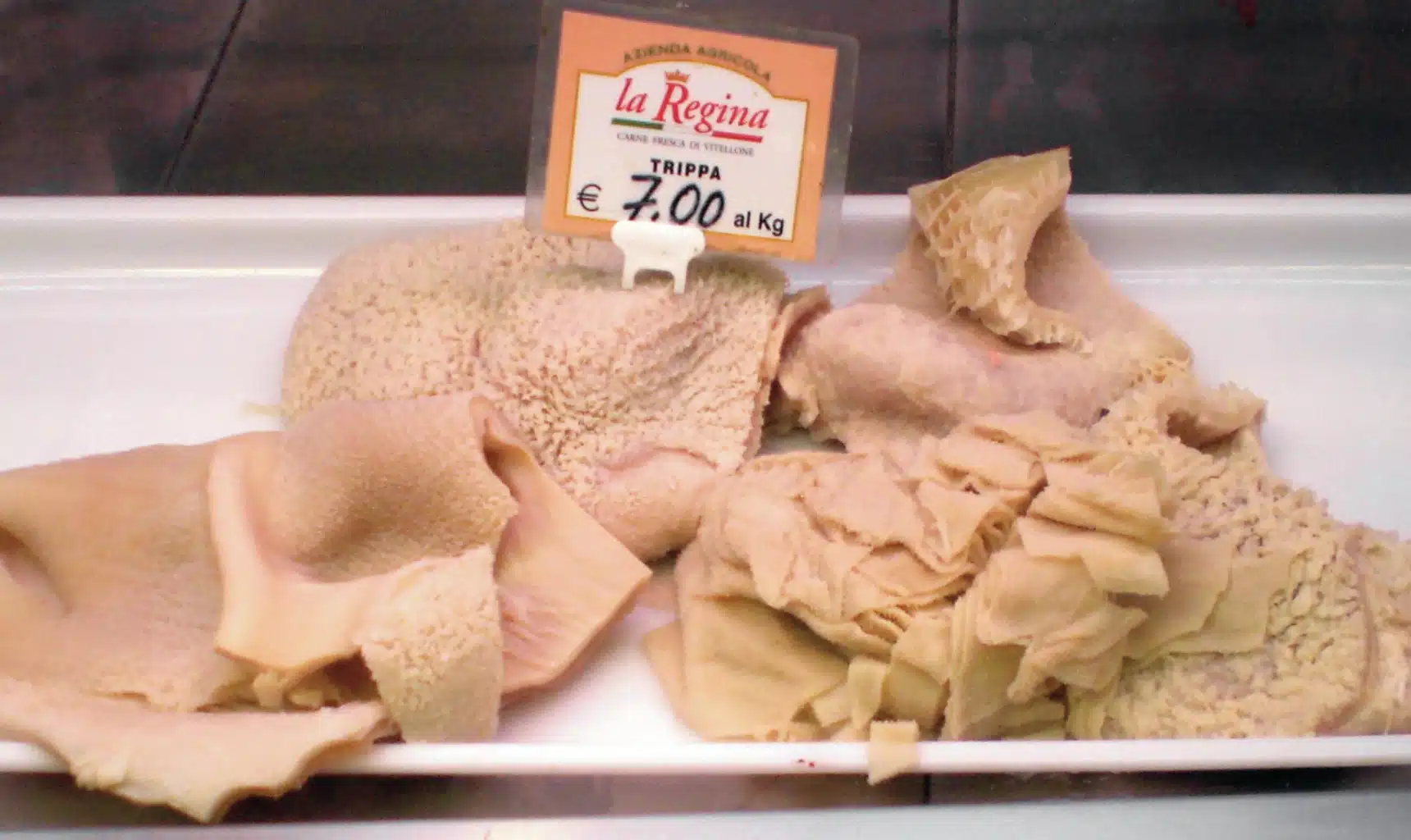
Tripe – trippa in Italian – is the edible lining of a cow’s stomach. It is one of the most used ingredients in Italian offal cooking, appearing in some form in almost every region of the country. It is also one of the most misunderstood. Most people who say they dislike tripe formed that view after eating it badly cooked. Good tripe, slow-cooked in the right company, is something else entirely.
What is Tripe?
Tripe comes from the stomach of a cow, which has four chambers. Most Italian recipes use one of three: the rumen, which has a smooth, flat surface and is sometimes called blanket tripe; the reticulum, which has a distinctive honeycomb pattern and is the most commonly used for its ability to absorb flavour; and the omasum, which has thin overlapping folds. The fourth chamber, the abomasum, is rarely used in Italian cooking. When a recipe simply calls for trippa, honeycomb tripe is almost always what is meant. It is the most tender, the mildest in flavour, and the most forgiving to cook.
Where is Tripe Eaten in Italy?
Tripe is eaten across all twenty Italian regions – it is one of the few ingredients with genuine national reach. Each region has developed its own approach, shaped by local ingredients and tradition. Rome is probably the most famous, with trippa alla Romana – tripe in tomato sauce finished with mint and Pecorino Romano – served every Saturday in the city’s traditional trattorias. Florence has its own street food version, the lampredotto sandwich, though that uses a different stomach chamber. Sicily seasons its tripe with cinnamon and almonds, a clear trace of Arab influence. Calabria adds peperoncino. Marche finishes with lemon. Friuli stews it with beans and potatoes in the style of the Alpine north. The variation is the point – tripe is not one dish in Italy, it is twenty.
Flavour and Texture
Raw tripe has a mild, slightly earthy smell that puts many people off before they have even cooked it. Cooked properly, that smell largely disappears. The flavour of tripe is subtle – mild and slightly mineral, with a faint meatiness. It does not taste strongly of anything on its own. That is exactly the point. Tripe is a vehicle for the flavours around it, absorbing whatever it is cooked with. A long simmer in tomato, wine, and aromatics produces a dish that tastes deeply of those things, with the tripe providing texture and body rather than a dominant flavour.
The texture is what defines it. Undercooked tripe is rubbery and unpleasant. Cooked long enough, it becomes tender but retains a slight chew – it should not fall apart. This is not a dish for impatient cooks.
How to Buy Tripe
Almost all tripe sold in the UK and Italy today is pre-cleaned. The raw stomach lining is bleached and blanched by the supplier before it reaches the butcher or supermarket, which is why tripe is usually pale cream or white when you buy it. You do not need to clean it yourself. A quick rinse under cold water before cooking is enough.
Look for tripe that is pale and firm with no strong smell. Avoid anything with a grey or yellowish tinge. A good butcher is the most reliable source – supermarket tripe tends to be pre-sliced and frozen, which is convenient but gives you less control over the cut. If you want honeycomb tripe specifically, ask for it directly. Ethnic food markets – particularly those serving Turkish, Middle Eastern, or South American communities – are often excellent sources of fresh tripe at reasonable prices.
How Long Does Tripe Take to Cook?
This depends on whether the tripe has been pre-cooked by the supplier. Most commercially sold tripe in the UK has been blanched, which means it is partially cooked already. From that point, a further 45 minutes to an hour of simmering is usually enough to reach the right texture. Raw, uncleaned tripe requires considerably longer – up to three hours. If in doubt, keep cooking. Tripe that is not ready announces itself immediately.
How to Cook Tripe
Start with a good soffritto – onion, carrot, and celery cooked slowly in olive oil until soft. This is the base of almost every Italian tripe recipe. Add the tripe, cut into strips of roughly 2cm width. Then add your liquid – tomato, white wine, stock, or a combination – and simmer on a low heat, partially covered, for at least 45 minutes. Do not rush it. Do not cook it on a high heat. Stir occasionally and check the liquid level.
The most common mistakes are cooking too fast, which makes the tripe rubbery, and under-seasoning, which leaves it flat. Tripe needs generous salt throughout cooking. It also needs acid to lift it – tomato, wine, or a splash of vinegar – and something sharp at the end, whether that is lemon zest, aged cheese, or fresh herbs. These are not optional extras. They are structural to the dish.
Is Tripe Healthy?
Tripe is high in protein and low in fat, and it contains meaningful levels of B12, zinc, and selenium. It is also relatively high in cholesterol, though this is worth keeping in perspective: tripe is cooked in small quantities alongside vegetables, legumes, and olive oil, which moderate its overall nutritional impact. Italians have been eating it for centuries without apparent ill effect.
Tripe - Frequently Asked Questions
What does tripe taste like?
Tripe has a mild, slightly mineral flavour with a faint meatiness. On its own it tastes of very little - which is precisely why Italian cooks build strong flavours around it. Slow-cooked in tomato, wine, and aromatics, the tripe absorbs those flavours and provides texture and body rather than a dominant taste of its own.
Why does tripe smell?
Raw tripe has a distinctive earthy smell because of its origin as a stomach lining. Most tripe sold today has been pre-cleaned and blanched by the supplier, which reduces the smell significantly. A quick rinse under cold water before cooking is enough preparation in most cases. Any residual smell largely disappears during cooking.
How long does tripe take to cook?
Pre-cleaned, commercially sold tripe needs around 45 minutes to an hour of slow simmering to reach the right texture. Raw, uncleaned tripe takes considerably longer - up to three hours. The key is low heat and patience. Tripe cooked too quickly on a high heat turns rubbery and unpleasant.
What is tripe called in Italian?
Tripe is called trippa in Italian. You will see it on menus across Italy as trippa alla romana (Roman style), trippa in umido (stewed), trippa alla fiorentina (Florentine style), and many other regional variations. The word trippa always refers to the stomach lining of a cow.
How do you know when tripe is cooked?
Properly cooked tripe is tender but retains a slight chew - it should not be soft enough to fall apart. Test it by pressing a piece between your fingers. If it still feels rubbery or tough, keep cooking. The texture should give without resistance but still have some structure. When in doubt, give it another fifteen minutes.
Italian Tripe Recipes
Almost every Italian region has its own take on trippa. Here are some of them – from the Alpine simplicity of Friuli to the Arab-inflected spicing of Sicily – each one shaped by the ingredients and traditions of its region.
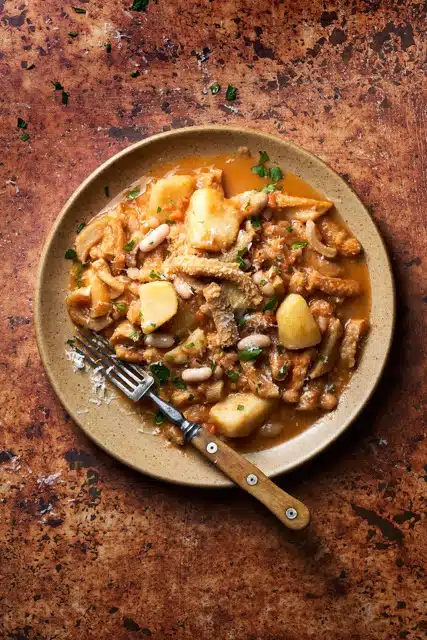
Trippa in Umido - Friuli
Tripe stewed in a soffritto of onion, carrot, and celery, with tomato paste, white wine, and chicken stock, finished with potatoes and borlotti beans. Simple and satisfying – the kind of one-bowl meal that defines Friulian home cooking at its most practical.

Trippa all'Aretina - Tuscany
Arezzo sits an hour south-east of Florence, and its tripe dish is better known locally than internationally. Tripe is cooked in a meat ragù of minced beef and pork with tinned tomatoes, red wine, and lemon zest. The ragù adds depth and richness you do not get from a plain tomato sauce. The lemon cuts through it at the end. A combination that should not work as well as it does.

Trippa alla Ragusana - Sicily
Ragusa is in the south-east of Sicily, a town shaped by Arab, Norman, and Spanish rule – all of which left their mark on the local kitchen. Tripe here is cooked in tomato sauce with almonds, walnuts, and cinnamon, which give it a warm, aromatic complexity that is immediately recognisable as Sicilian. It is a long way from the Roman version, and all the better for it.
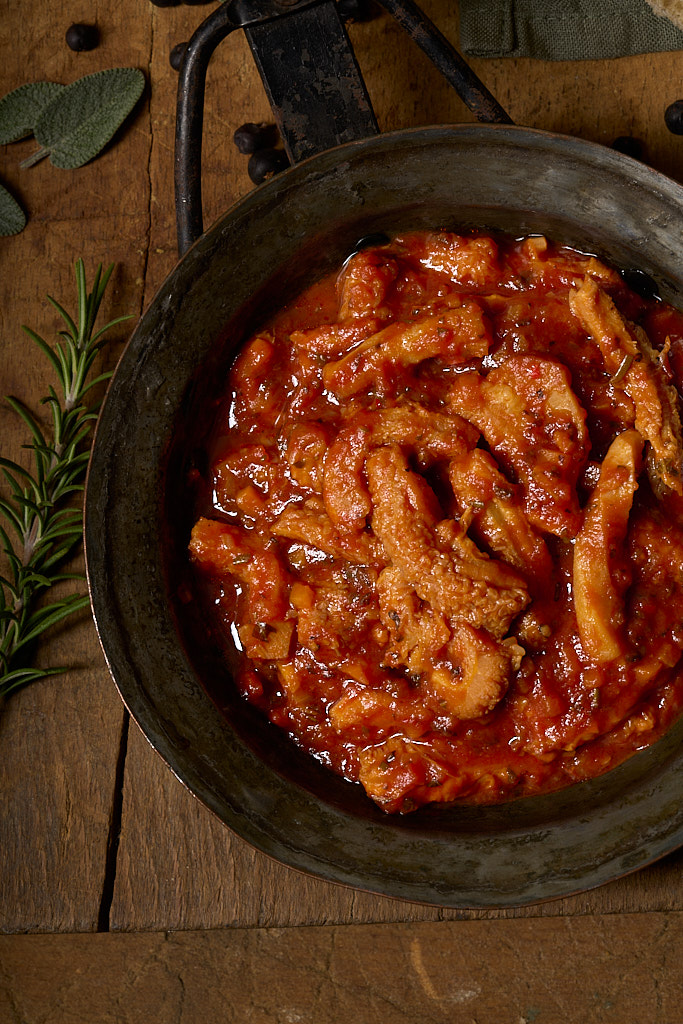
Trippa alla Napoletana - Campania
Naples has a long tradition of cucina di recupero – cooking that wastes nothing. Here tripe is marinated in white wine, then slow-cooked in passata with sage, rosemary, bay, basil, and juniper berries for at least two hours. Strong, direct, and uncompromising – the kind of dish that smells of a Naples apartment stairwell on a Sunday morning. That is not a criticism.
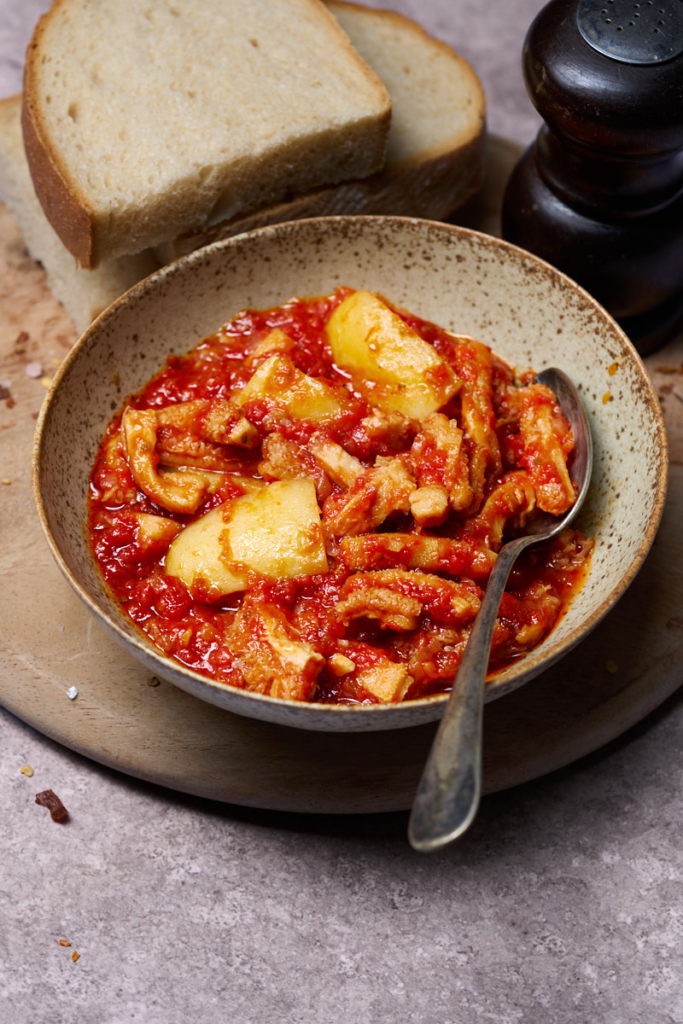
Trippa e Patate alla Calabrese - Calabria
Calabria adds heat. Tripe cooked with potatoes and Calabrian peperoncino chilli – the same chilli that runs through the region’s entire food tradition. The potatoes absorb the spiced cooking liquid and become as much the point of the dish as the tripe itself. Straightforward and warming, with a kick that builds slowly.

Trippa alla Romana - Lazio
The most famous Italian tripe dish, served every Saturday in Rome’s traditional trattorias. Tripe simmered in tomato sauce, finished with freshly chopped mint and a generous grating of Pecorino Romano. The mint is the signature – unusual in a savoury context, but it cuts through the richness of the sauce in a way that nothing else does. This is the dish that converts tripe sceptics.
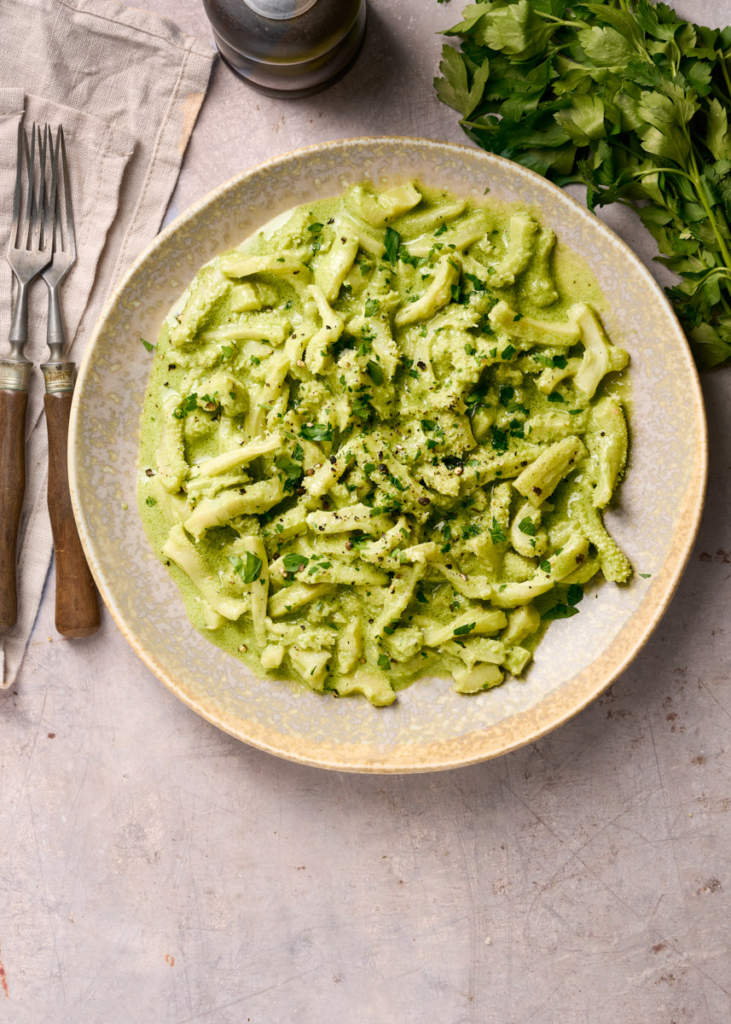
Trippa all'Anconetana - Marche
Ancona’s tripe dish is herb-led and finished with lemon – a combination that gives it a brightness and freshness that sets it apart from the heavier, tomato-based versions further south. The port city’s cooking reflects its position on the Adriatic coast: cleaner flavours, lighter touch, more restrained than Roman or Neapolitan style.
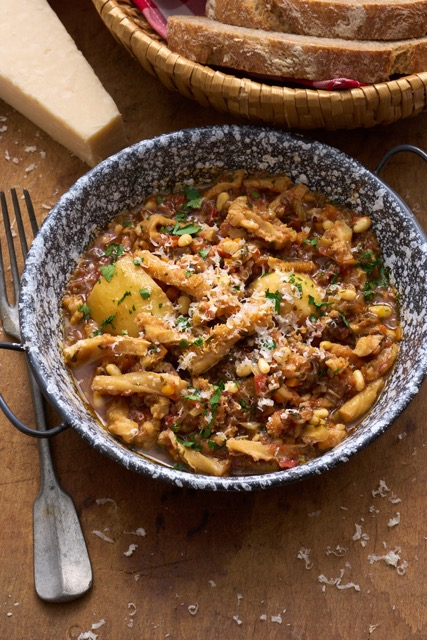
Trippa alla Genovese - Liguria
Genoa’s tripe stew – slow-cooked with dried porcini, white wine, tomato, and Liguria’s signature ingredient – pine nuts. Trippa alla Genovese was once the food of the caruggi, the city’s narrow medieval alleyways, where dedicated tripe shops kept their cauldrons simmering all day. This recipe is all that’s left.
More From the Italian Pantry
- Anchovies - Italy's most versatile preserved fish, used across every region from Liguria to Sicily.
- Wild Boar - the defining meat of the Tuscan Maremma, slow-cooked in wine and juniper.
- Olives - from Ligurian taggiasca to Sicilian nocellara, a regional guide to Italian olives.
- Montasio - Friuli's great mountain cheese, eaten young or aged into frico.