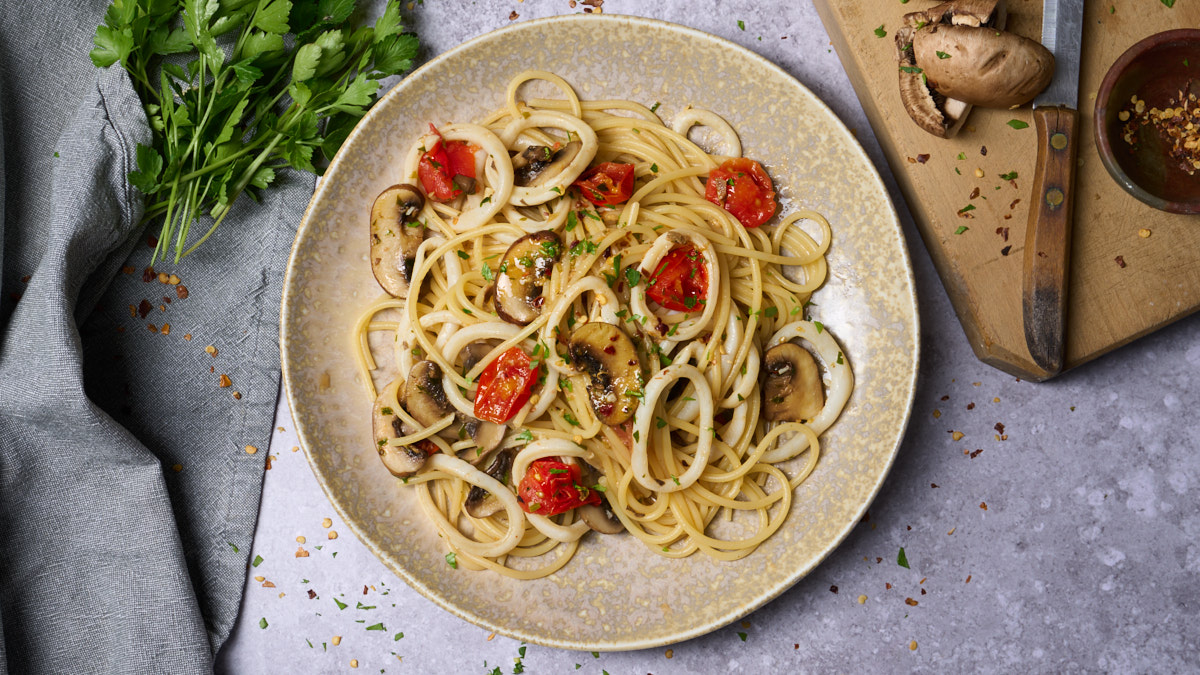
Spaghetti mare e monti
Spaghetti with squid and mushrooms in a white wine and tomato sauce. A quick pasta dish from the Marche coast and Apennine hills, ready in 35 minutes.
Equipment
- Large pot for boiling pasta
- Large wide frying pan or sauté pan
- colander
- Chopping Board
- Chef's knife
- Wooden spoon or silicone spatula
- Slotted spoon
- Small bowl for soaking dried porcini
- Fine sieve for straining porcini soaking liquid
Ingredients
- 400 grams spaghetti (good quality italian brand)
- 400 grams cleaned squid calamari, bodies and tentacles
- 250 grams chestnut mushrooms sliced
- 5 grams dried porcini rehydrated in 150ml warm water
- 200 grams cherry tomatoes halved
- 3 cloves garlic lightly crushed
- 4 tbsp extra virgin olive oil
- 100 ml dry white wine
- 1 tsp dried chilli flakes
- Small bunch flat-leaf parsley chopped
- Salt and black pepper
Instructions
- Place the dried porcini in a small bowl and cover with 150ml warm water. Leave for 15 minutes while you prepare the rest of the ingredients, then drain through a fine sieve and reserve the soaking liquid. Chop the rehydrated mushrooms roughly.
- Bring a large pot of salted water to the boil.
- Heat the olive oil in a wide frying pan over a high heat. Add the chestnut mushrooms and rehydrated porcini in a single layer and cook without stirring for 3 to 4 minutes until they colour on one side. Season with salt and toss, then set aside.
- Cook the spaghetti in the boiling salted water until just under al dente, about 2 minutes less than the packet instructions.
- Add the garlic to the pan and cook for 1 minute. Then add the tomatoes, the chilli flakes, a pinch of salt and a good pinch of parsley. When the tomatoes are beginning to release their juices, add the white wine. Cook over a high heat, stirring occasionally, for 3 to 4 minutes or until the white wine has reduced by half.
- Add the squid pieces and tentacles and cook gently until the squid is cooked. Just a few minutes.
- Using tongs, add the cooked spaghetti directly to the pan with the sauce. Toss over a medium heat for 1 to 2 minutes, adding a splash of pasta water if the sauce needs loosening.
- Remove from the heat, add another pinch of parsley, and toss once more. Divide between four bowls and finish with the remaining parsley.
Notes
1. The dried porcini are not optional. They carry the earthy depth that makes the mountain half of this dish work. The chestnut mushrooms add bulk and texture; the porcini add flavour.
2. Strain the porcini soaking liquid through a fine sieve before adding to the sauce. It concentrates the mushroom flavour and is worth using.
3. Do not overcook the squid. High heat and short time keeps it tender. If it goes rubbery, it has overcooked.
4. Keep a cupful of pasta cooking water before draining. The starch helps the sauce coat the pasta evenly.
5. Mixed seafood such as prawns, mussels, or clams can replace some or all of the calamari. Add shellfish at the same stage as the squid.
6. Linguine works well in place of spaghetti. For the most Marchigiani version of this dish, use maccheroncini di Campofilone, an IGP pasta from the province of Fermo, if you can find it.
2. Strain the porcini soaking liquid through a fine sieve before adding to the sauce. It concentrates the mushroom flavour and is worth using.
3. Do not overcook the squid. High heat and short time keeps it tender. If it goes rubbery, it has overcooked.
4. Keep a cupful of pasta cooking water before draining. The starch helps the sauce coat the pasta evenly.
5. Mixed seafood such as prawns, mussels, or clams can replace some or all of the calamari. Add shellfish at the same stage as the squid.
6. Linguine works well in place of spaghetti. For the most Marchigiani version of this dish, use maccheroncini di Campofilone, an IGP pasta from the province of Fermo, if you can find it.